When buyers search for how to build a private label beverage brand, they usually do not need another sales page. They need a clear way to avoid wrong products, unclear prices, missing documents and weak sample reviews.
In real buyer conversations, the same issue appears again and again. The buyer wants a fast answer, but the supplier cannot answer well until the product, market, packing and order route are clear.
Quick answer: Build the brand around a clear buyer, product category, packaging format, label plan, sample review and order route.
Key Takeaways
| Main problem | New brand owners often start with design before choosing the right product route. |
|---|---|
| Best first step | Write down the product category, destination market, buyer type and expected volume. |
| What affects price | Product format, packing, label work, sample needs, documents and shipping terms. |
| Buyer safety note | Confirm local label and import rules with your own importer, adviser or customs broker. |
Start with the market problem
A private label brand should solve a market problem. It might be a missing category, a better shelf look, a different flavour range or a product that fits a distributor gap.
Validate product-market fit before formulation by reviewing how to choose beverage products for your market.
Do not start only with a logo. Start with the buyer, the channel and the drink category. The brand design should support that decision.
What does your buyer need that is missing now?
Which category can your channel sell repeatedly?
Keep the message simple and easy to trust.
Move from idea to sample
Once the category is clear, buyers can discuss flavour direction, packaging, label language and samples. Samples help test the product before bigger commercial steps.
The best feedback is specific. Say what you liked, what did not fit, and what would need to change for your market.
What many guides miss
Many guides talk about branding but ignore supplier communication. A real private label project needs clear files, clear market details and a quote-ready checklist.
Choosing a Beverage Contract Manufacturer: OEM Formulation vs. Turnkey ODM
When partnering with a commercial beverage production facility, international distributors and brand owners must choose between two production routes:
Deciding whether to formulate a proprietary recipe or customize an existing base requires evaluating OEM vs ODM beverage manufacturing routes.
| Manufacturing Model | How It Works | Best Suited For |
|---|---|---|
| OEM (Original Equipment Manufacturing) | Custom recipe formulation from scratch. The brand owns the proprietary formula, ingredient ratios, and bespoke packaging specifications. | Established brands with dedicated R&D budgets seeking unique market differentiation. |
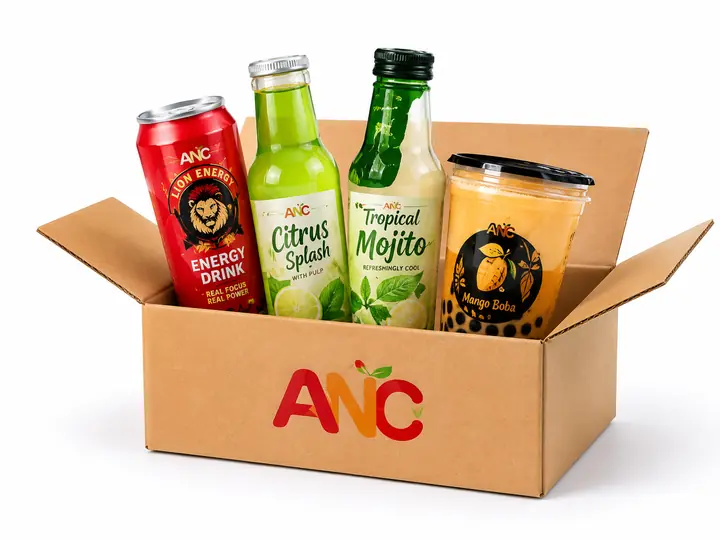
| ODM (Original Design Manufacturing) | Turnkey private labeling. The buyer selects market-tested formulas from the manufacturer's catalog and applies custom branding and beverage packaging and label design guide. | Fast market entry, lower initial MOQs, and retail/distributor store brands. |
Functional RTD Beverage Manufacturing: Energy, Electrolytes, Vitamins & Ready-to-Drink Teas
The fastest-growing segment in private label beverages is functional ready-to-drink (RTD) formulations. Modern contract bottling facilities support a wide array of active ingredient infusions tailored to regional regulatory requirements:
| Functional Category | Key Active Ingredients | Popular Packaging Formats |
|---|---|---|
| Functional Energy & Focus Drinks | Natural caffeine (Green tea/Guarana), Taurine, L-Theanine, B-Complex vitamins (B3, B6, B12) | 250ml & 330ml Slim Aluminum Cans |
| Isotonic & Electrolyte Hydration | Coconut water concentrate, Potassium citrate, Magnesium lactate, Himalayan pink salt | 350ml & 500ml Ergonomic PET Bottles |
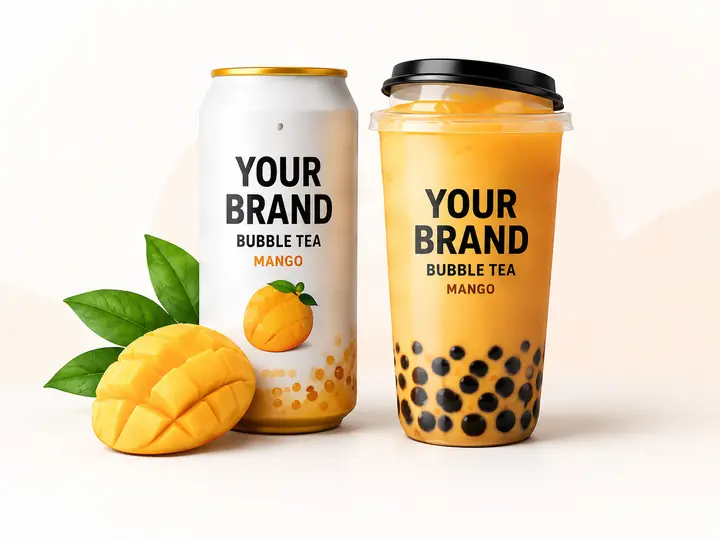
| Ready-to-Drink Fruit & Boba Teas | Real black/green tea infusions, fruit puree, popping boba pearls, aloe vera gel | 250ml Ready-to-Drink Cups with Straw & 320ml Cans |
| Sparkling Botanical & Vitamin Water | Vitamin C (Ascorbic acid), Zinc gluconate, Ginger extract, Hibiscus flower infusion | 330ml Sleek Cans & Glass Bottles |
Essential B2B Export Documentation Checklist for Beverage Importers
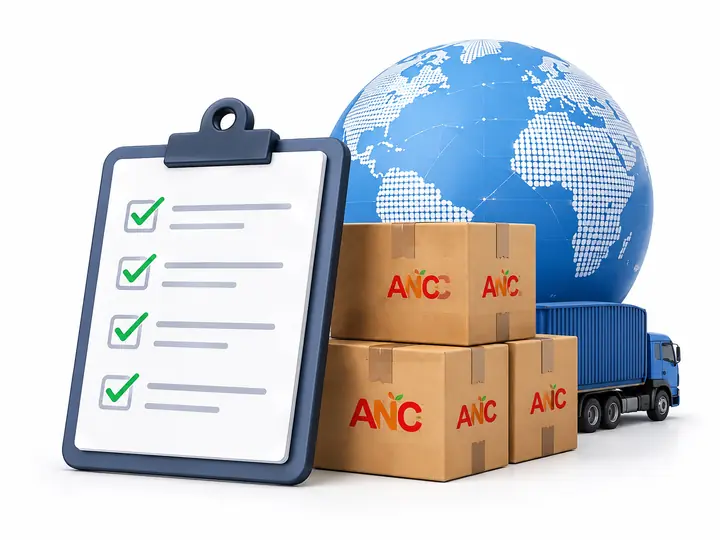
Before placing full-container orders (FCL), ensure your manufacturing partner provides complete international compliance documentation:
- Certificate of Analysis (COA): Validating microbiological safety, heavy metal screening, Brix, and pH levels per production batch.
- Certificate of Free Sale (CFS) & Health Certificate: Required by destination customs and health authorities to verify commercial marketability.
- Certificate of Origin (COO / Form E / Form D): Crucial for claiming preferential import tariffs under international trade treaties.
- Bilingual Nutrition & Ingredient Compliance Proof: Ensuring font sizing, allergen disclosures, and net volume declarations conform strictly to FDA, EFSA, or GCC standards.
Questions to Ask Before You Compare Suppliers
A good supplier reply depends on the quality of your question. Before you compare offers, ask what product information is available, how samples can be reviewed, what packing details can be shared, and which documents can be discussed for your destination market.
When negotiating with co-packers, use our verified wholesale beverage supplier checklist for distributors to evaluate factory standards.
This step also helps your team avoid false comparisons. Two offers may look similar, but the pack size, carton count, label work, sample route or shipping term may be different. Ask for the details first, then compare.
Common Buyer Mistakes to Avoid
The most common mistake is asking for a final price too early. A supplier cannot give a useful answer if the product category, packaging format, destination market and volume are still unclear.
Another mistake is approving design or samples without checking local label and import rules. Keep the process simple. Confirm the market, review samples, check label needs, then move into quote and order planning.
Private Label Brand Checklist
Before placing commercial purchase orders, ensure your team requests all mandatory beverage import documents from the factory.
Examine retail supply chains and distribution models in ready-to-drink beverages for importers and sellers.
Frequently Asked Questions
What should I send first?
Can samples be discussed?
Who checks local label rules?
When can pricing be discussed?
Can ANC Group support export buyers?
Final Buyer Note
If you are comparing suppliers, keep one simple file for each enquiry. Add the product category, target country, buyer type, preferred packaging, expected volume, sample needs and document questions. This keeps your team aligned and makes supplier replies easier to compare.
The best buyer messages are not long. They are clear. A short, complete enquiry usually gets a better reply than a long message with missing details.
Conclusion
From our experience, strong beverage projects do not start with a perfect logo or a long message. They start with clear basics: market, product category, packaging, sample needs and order plan.
Use this guide as a working checklist. If you can answer these points before contacting a supplier, you will get a more useful reply and you will avoid many early mistakes.