Coffee can be hard to replace because you may miss more than caffeine.
There is the roasted smell, bitter taste, full body, warm cup, and morning routine. A good coffee substitute needs to replace the parts of coffee that matter most to you.
For some people, that means finding a drink with no caffeine. Others care more about taste, acid reflux, sleep, convenience, or keeping some caffeine without drinking a regular cup of coffee.
This guide compares chicory root, dandelion root, Teeccino, Dandy Blend, mushroom drinks, matcha, roasted barley, and golden milk. You will also find a caffeine taper, cost comparison, homemade chicory recipe, and answers to common questions.
Roasted chicory root is one of the closest caffeine-free coffee substitutes for people who want dark color, roasted bitterness, and a fuller body.
Research describes roasted chicory as a caffeine-free drink used as a coffee substitute, and newer research notes its long history of copying some of coffee's sensory qualities.
Teeccino and roasted dandelion root are also worth trying if coffee-like taste matters.
If your goal is lower caffeine rather than zero caffeine, matcha and some mushroom drinks are another option.
MUD\WTR Original currently contains 35 mg of caffeine per serving. RYZE Mushroom Coffee contains about 48 mg per cup and includes Arabica coffee.
There is no single best choice for everyone. Start with the reason you want to replace coffee.
Coffee Substitute Comparison
Which Coffee Substitutes Actually Taste Like Real Coffee? Taste-Match Reviews
The biggest hurdle when transitioning away from coffee is finding an alternative that replicates the deep roasted bitterness, body, and aroma of espresso or drip coffee. Based on sensory evaluations, here is how the top substitutes rank for true coffee flavor:
| Coffee Alternative | Coffee Taste Similarity | Flavor Profile & Sensory Notes | Caffeine Content |
|---|---|---|---|
| Roasted Chicory & Barley Blends | 9 / 10 (Closest Match) | Heavy roasted grain bitterness, dark crema, caramelized molasses note. | 0mg (100% Caffeine-Free) |
| Roasted Dandelion Root | 8.5 / 10 (Rich & Earthy) | Nutty, dark roast astringency, excellent mouthfeel with oat or milk. | 0mg (100% Caffeine-Free) |
| Functional Mushroom Coffee | 7.5 / 10 (Mild Umami) | Earthy, cacao-like undertones, smooth and low-acid. | 30mg–50mg (Low Caffeine) |
| Ceremonial Matcha Green Tea | 4 / 10 (Tea Profile) | Vegetal, grassy, sweet umami; gives steady energy without coffee flavor. | 60mg–80mg (High L-Theanine) |
The taste ratings below are editorial comparisons based on roast character, bitterness, color, and body. They are not scientific scores.
Why Do People Look for Coffee Alternatives?
Coffee is not automatically unhealthy.
The FDA says 400 mg of caffeine a day is an amount not generally linked with negative effects for most adults. Sensitivity varies, and some medications, health conditions, and pregnancy can change how much caffeine is suitable for a person.
People usually switch for more specific reasons.
They Want Less Caffeine
Caffeine can cause anxiety, jitters, sleep problems, headache, digestive symptoms, or a fast heartbeat in some people, especially at higher doses or in people who are sensitive to it.
You do not have to go from several coffees a day straight to zero caffeine.
Your options include:
- caffeine-free chicory
- caffeine-free dandelion
- caffeine-free herbal coffee
- instant root drinks
- lower-caffeine mushroom coffee
- matcha
Coffee Seems to Make Reflux Worse
Coffee and other caffeine sources are among the foods and drinks commonly linked with GERD symptoms.
Triggers differ between people, so NIDDK recommends paying attention to foods and drinks that make your own symptoms worse.
GERD can develop when the lower esophageal sphincter, or LES, becomes weak or relaxes at the wrong time.
A coffee substitute may remove one personal trigger. It does not treat the cause of GERD.
They Want Better Sleep
Caffeine can affect sleep long after you drink it.
In a controlled study, 400 mg of caffeine taken at bedtime, three hours before bed, or six hours before bed caused more sleep disturbance than placebo.
The effect depends on the amount, timing, and the person.
If sleep is the main reason you want to change your morning or afternoon drink, a caffeine-free option gives you the clearest break from caffeine.
Coffee Makes Them Feel Wired
Caffeine stimulates the central nervous system.
A controlled study in healthy young men also found that a dose similar to roughly two or three cups of coffee temporarily increased ACTH and cortisol. That does not mean normal coffee use causes harmful cortisol levels in everyone. It shows that caffeine can produce a short-term hormonal response.
If coffee regularly makes you feel shaky or anxious, reducing your caffeine intake is a more useful test than assuming every coffee drink will affect you the same way.
They Miss the Ritual More Than the Caffeine
This is where taste and brewing style matter.
Matcha may replace caffeine, but it does not taste like coffee.
Golden milk gives you a warm cup, but it does not provide roasted bitterness.
Chicory, dandelion, barley, and roasted herbal blends come closer to the color, smell, bitterness, and body many coffee drinkers miss.
1. Roasted Chicory Root
Chicory is Cichorium intybus.
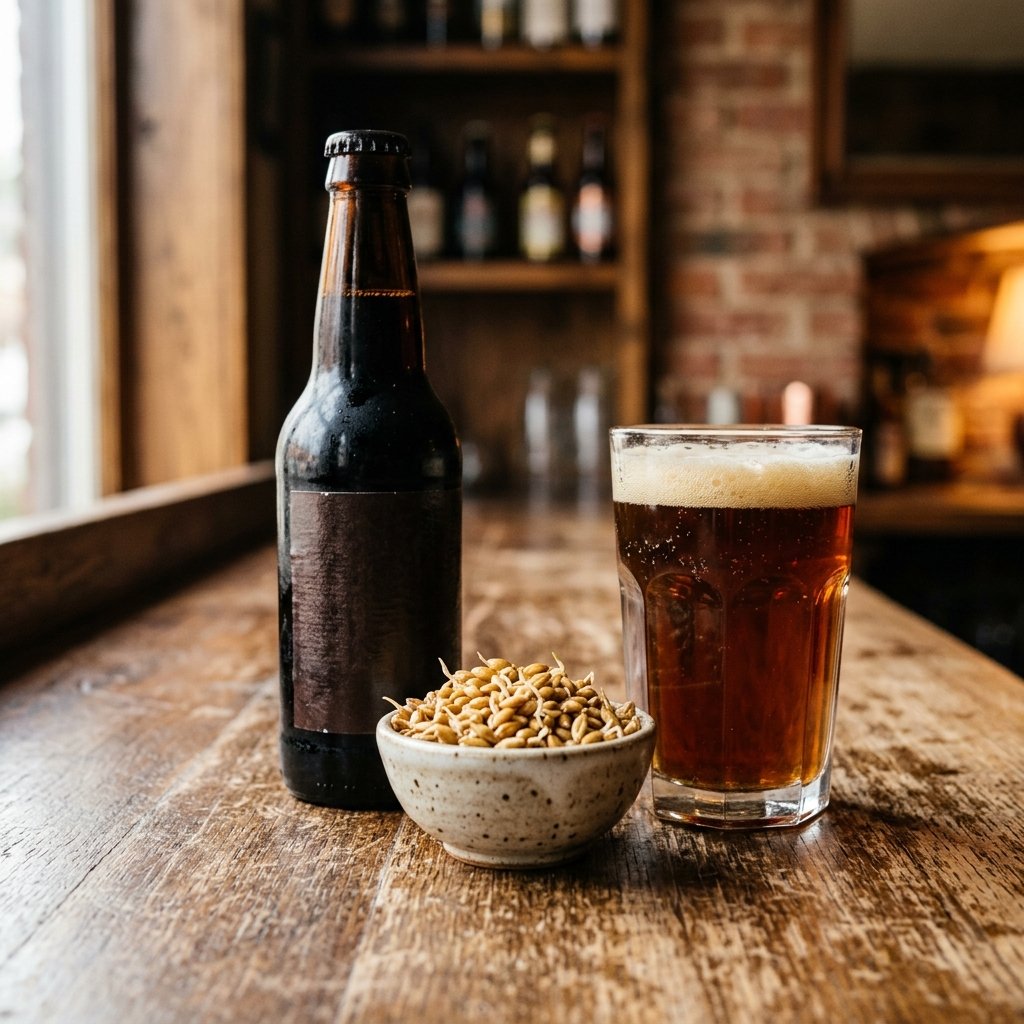
Roasted barley alternatives share toasted grain compounds with dark brewed non-alcoholic beer.
Its root is dried, roasted, ground, and brewed. Roasting creates a dark drink with earthy, woody, nutty, and bitter notes.
Scientific literature describes instant chicory as a caffeine-free coffee substitute.
Chicory also contains inulin, a type of soluble prebiotic fiber.
Research using measured amounts of chicory-derived inulin has found changes in gut bacteria, including increases in bifidobacteria. Results from a controlled trial used 8 grams of inulin per day, so they should not be treated as proof that one ordinary cup of chicory drink produces the same effect.
What does chicory coffee taste like?
Expect:
- dark roast character
- earthy flavor
- firm bitterness
- a slightly woody or nutty finish
- more body than most herbal teas
It is one of the better choices if you normally drink dark roast coffee.
Who is it best for?
Chicory makes sense if you want:
- zero caffeine
- a strong roasted taste
- a drink that can be brewed like coffee
- an ingredient rather than a branded powder
What should you watch for?
Inulin and other fermentable fibers can cause gas or digestive discomfort in some people.
The amount of inulin in a brewed drink can also differ from the amount used in supplement studies.
2. Roasted Dandelion Root
Dandelion is Taraxacum officinale.
For an ultra-gentle, low-calorie morning cup, blending chicory with dairy-free rice milk avoids all major food allergens.
Roasting the root creates an earthy, nutty drink with mild bitterness.
Pure roasted dandelion root does not contain coffee, so it is commonly used in caffeine-free herbal blends.
What does it taste like?
It is usually softer and less bitter than chicory.
Someone who finds pure chicory too strong may prefer dandelion root alone or a chicory-dandelion blend.
What about liver claims?
Dandelion products are often linked with liver or detox claims.
I cannot confirm that drinking roasted dandelion coffee provides a proven liver benefit based on the evidence supplied in the research report.
It should therefore be presented as a coffee alternative, not a liver treatment.
3. Teeccino Herbal Coffee
Teeccino is a commercial herbal coffee range.
Its current Original Herbal Coffee lists:
- organic carob
- organic barley
- organic chicory
- organic ramón seed
The product page lists zero caffeine and 650 mg of inulin per 10 g serving.
The Original blend can be prepared in a French press, drip machine, or pour-over, which helps preserve more of the coffee-making routine.
Taste
Expect a roasted flavor with some natural sweetness from the plant ingredients.
It may suit people who find pure chicory too bitter.
One point to check
Original Teeccino contains barley.
That matters if you need to avoid gluten. Always check the exact product because Teeccino sells several formulas.
Manufacturer health claims should also be treated as brand claims unless they are backed by independent research on the finished product.
4. Dandy Blend
Dandy Blend is an instant drink made from four roasted extracts:
- barley
- rye
- dandelion root
- chicory root
The manufacturer lists it as caffeine-free.
Unlike loose roasted roots, it dissolves directly in liquid.
No French press, filter, or steeping time is needed.
Who is it best for?
Dandy Blend is a strong option if you care about:
- fast preparation
- office use
- travel
- hot or cold drinks
- zero caffeine
Taste
It has a smoother and milder roast profile than strong chicory.
The instant format also makes the strength easy to change. Use more powder for a darker cup or less for a lighter drink.
5. Mushroom Coffee and Mushroom-Based Coffee Alternatives
The term mushroom coffee can be misleading because products in this group are very different.
Some contain real coffee.
Some contain tea.
Some use cacao and spices instead.
Some contain caffeine, while others do not.
Always check the ingredient list.
MUD\WTR Original
MUD\WTR Original currently lists:
- cacao
- black tea powder
- spices
- Lion's Mane
- Chaga
- Reishi
- Cordyceps
It contains 35 mg of caffeine per serving.
Its flavor is closer to cocoa and chai spices than a traditional cup of black coffee.
RYZE Mushroom Coffee
RYZE states that its Mushroom Coffee contains about 48 mg of caffeine per cup.
It also contains Arabica coffee, which gives it a stronger link to the taste of normal coffee than mushroom drinks made without coffee beans.
Who are mushroom drinks best for?
They may suit people who want to reduce caffeine but still want some stimulation or real coffee flavor.
They are a poor fit if your goal is guaranteed zero caffeine unless the exact product label confirms zero.
- Mushroom Coffee vs Regular Coffee
- Best Mushroom Coffee Alternatives
- Lion's Mane Coffee: What Research Actually Shows
What Do Lion's Mane, Chaga and Adaptogen Ingredients Add?
Mushroom coffee marketing often focuses heavily on ingredients such as Lion's Mane and Chaga.
The research report identified this as an area where direct-to-consumer brands make strong claims while giving less attention to how closely their drinks actually resemble coffee.
Lion's Mane
Lion's Mane is Hericium erinaceus.
It is commonly added to mushroom drinks marketed around focus and mental performance.
Research on a mushroom species or a concentrated extract does not automatically prove that every drink containing that mushroom produces the same result.
The form, dose, extraction method, mushroom part, and rest of the formula all matter.
Chaga
Chaga also appears in mushroom beverage formulas.
Brands often connect it with antioxidant or immune claims.
A label claim should not be treated as evidence that the finished drink prevents illness or improves immune function.
What does adaptogen mean on a product label?
The term is often used for certain herbs and mushrooms sold as helping the body deal with stress.
Do not judge a drink from that word alone.
Check:
- The exact ingredient.
- The amount per serving.
- The caffeine level.
- Whether the finished product has been tested.
- Whether the evidence comes from independent research or the company selling it.
Ingredient research and finished-product research are not the same thing.
6. Matcha
Matcha is finely ground green tea.
It contains caffeine and L-theanine, so it is not a caffeine-free coffee substitute.
It also tastes very different from coffee.
Expect a grassy, vegetal, slightly bitter, umami flavor.
A randomized study using matcha found small improvements in some attention tasks, while many other mental-performance and mood measures showed little or no change.
A later systematic review found that caffeine combined with L-theanine probably improves some attention measures, but the authors also found uncertainty in several outcomes.
Best for
Matcha makes sense if you:
- still want caffeine
- enjoy tea
- do not need a coffee-like flavor
- want an alternative to a standard cup of coffee
7. Roasted Barley
Roasted barley drinks have a toasted cereal and nut-like taste.
Roasted barley coffee alternatives share their core roasted malt character with traditional non-alcoholic malt beverages.
Pure roasted barley contains no caffeine unless another caffeinated ingredient is added.
Its taste is usually milder than chicory, with less bitterness and a lighter body.
Best for
Choose roasted barley if you want:
- a caffeine-free warm drink
- mild roast flavor
- less bitterness than chicory
Watch for gluten
Barley contains gluten.
It is therefore not suitable for someone who must avoid gluten unless the product uses a different ingredient and is clearly labelled accordingly.
8. Golden Milk
Golden milk is usually made with turmeric, ginger, milk or a plant drink, and optional spices such as cinnamon.
It should be treated as an alternative morning or evening drink, not a close coffee copy.
Its flavor is creamy and spiced rather than roasted and bitter.
If every ingredient used is caffeine-free, the finished drink will also be caffeine-free.
Avoid making broad treatment or anti-inflammatory claims about the finished drink unless you have evidence for the exact ingredients and amounts used.
Which Coffee Substitute Tastes Most Like Coffee?
If taste is your first concern, start with roasted ingredients.
A practical order to test is:
- Roasted chicory
- Teeccino
- Roasted dandelion
- Dandy Blend
- RYZE or another mushroom drink containing real coffee
- Roasted barley
- MUD\WTR Original
- Matcha
- Golden milk
This order is an editorial sensory guide, not a laboratory ranking.
Your result will depend on:
- your usual coffee
- brewing strength
- roast level
- milk or creamer
- sweetener
- serving temperature
If you drink black dark roast
Start with chicory.
If you prefer smoother coffee
Try Teeccino or Dandy Blend.
If you drink sweet lattes
A carob, cacao, or mushroom blend may feel less different once you add milk.
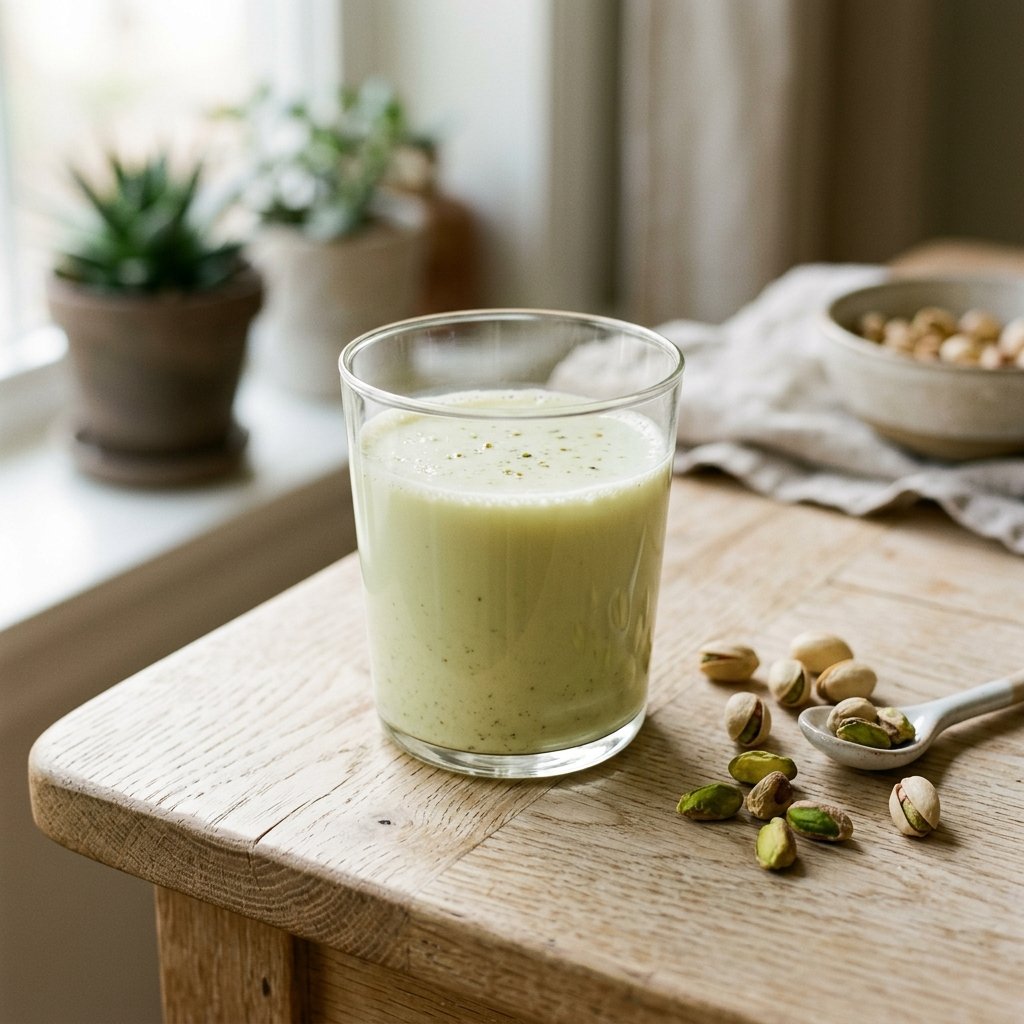
To create a rich dairy-free latte with chicory or dandelion root brews, steaming with barista pistachio milk produces luscious microfoam.
If you drink straight espresso
No herbal substitute fully copies espresso.
Espresso has concentrated coffee oils, aroma, body, and crema that roasted roots do not reproduce.
Best Caffeine-Free Coffee Substitutes
If zero caffeine matters, read the label instead of relying on terms such as coffee alternative or mushroom coffee.
Good starting points include:
- pure roasted chicory
- pure roasted dandelion root
- Teeccino caffeine-free blends
- Dandy Blend
- pure roasted barley
- golden milk made with caffeine-free ingredients
MUD\WTR Original and RYZE Mushroom Coffee do not belong in the caffeine-free group.
MUD\WTR Original lists 35 mg per serving, while RYZE lists about 48 mg per cup.
Best Instant Coffee Substitute
Instant coffee alternatives are useful if you care more about speed than brewing.
Dandy Blend is one clear example.
Its manufacturer says the powder dissolves in liquid at any temperature without steeping or brewing.
Instant vs Brewed Coffee Alternatives
If brewing itself is part of the experience you miss, chicory or Teeccino may feel more satisfying.
If you need a cup in under a minute, instant powder has the clear edge.
Best Coffee Substitute for GERD and Acid Reflux
There is no drink that can be named the best GERD coffee substitute for every person.
NIDDK lists coffee and other caffeine sources among foods and drinks commonly linked with GERD symptoms.
That does not mean caffeine causes every case of GERD.
It also does not mean every caffeine-free drink will be symptom-free.
A useful test is to:
- Choose a simple caffeine-free product.
- Keep the serving size similar to your usual drink.
- Avoid changing several other foods at the same time.
- Track symptoms for several days.
- Stop using the substitute if it clearly makes symptoms worse.
Be careful with claims such as non-acidic coffee substitute.
A product needs its own acidity or pH evidence before that description can be verified. A caffeine-free drink is not automatically non-acidic.
You should seek medical care for reflux symptoms with chest pain, trouble or pain when swallowing, persistent vomiting, signs of digestive bleeding, loss of appetite, or unexplained weight loss.
What About Gastritis?
Gastritis is inflammation of the stomach lining.
A coffee substitute should not be presented as a treatment for it.
NIDDK states that food and nutrition do not play an important role in causing most cases of gastritis or gastropathy. Common causes include H. pylori infection, long-term exposure to substances such as NSAIDs or alcohol in some forms, autoimmune disease, and other medical causes.
If coffee makes your symptoms feel worse, replacing it may remove a personal trigger.
That is different from treating the cause of gastritis.
How to Quit Coffee Without Headaches
Caffeine withdrawal is a recognized condition.
Common symptoms include:
- headache
- fatigue
- drowsiness
- irritability
- trouble concentrating
- lower alertness
- nausea or flu-like symptoms in some people
Symptoms often begin within 12 to 24 hours, peak around 20 to 51 hours, and usually resolve within 2 to 9 days.
Current clinical guidance favors gradually reducing caffeine instead of stopping suddenly when possible.
StatPearls suggests reducing intake by around 25% to 50% every few days, especially for heavier caffeine users.
7-Day Caffeine Taper Example
The Deep Research report recommends this simple seven-day structure.
This is an example, not a fixed medical schedule.
The calculation also assumes the substitute contains zero caffeine.
If you replace coffee with matcha, MUD\WTR, RYZE, or another caffeinated drink, calculate the caffeine in both drinks rather than relying on the mixing percentage.
People with migraine, pregnancy, heart conditions, medication concerns, or heavy caffeine use may need individual advice from a health professional.
How to Make Homemade Chicory and Dandelion Coffee
The research report recommends a blend of chicory, dandelion, carob, and cinnamon.
Ingredients
- 3 tablespoons roasted chicory root granules
- 2 tablespoons roasted dandelion root
- 1 tablespoon carob powder
- 1/4 teaspoon cinnamon
- 2 cups filtered water heated to about 205°F
- milk or creamer, optional
Method
- Mix the chicory, dandelion, carob, and cinnamon.
- Add 2 tablespoons of the mixture to a French press.
- Pour in 2 cups of hot water.
- Steep for 5 to 7 minutes.
- Press slowly.
- Pour into mugs.
- Add milk or creamer if you prefer a softer finish.
Use slightly more blend for a darker cup.
Use less blend or shorten the brew time if the result is too bitter.
MUD\WTR vs RYZE vs Teeccino vs Dandy Blend
These four products target different needs.
MUD\WTR confirms the Original blend contains 35 mg of caffeine.
RYZE confirms about 48 mg and the presence of Arabica coffee.
Teeccino Original lists zero caffeine.
Dandy Blend lists its regular product as caffeine-free.
Which tastes most like coffee?
RYZE has an advantage because it contains actual Arabica coffee.
Among caffeine-free options, Teeccino and Dandy Blend aim more directly at a coffee-like cup.
MUD\WTR Original is closer to cacao and chai in flavor than espresso or drip coffee.
Cost per Cup
Price check: August 21, 2026
Prices change, so this section should be checked during future content updates.
Serving sizes also differ between brands. Treat this as a practical cost comparison, not an exact volume-for-volume test.
Dandy Blend currently states that regular Dandy Blend costs about $0.11 to $0.18 per cup depending on bag size.
Teeccino lists an 11 oz Original bag at a $16.99 subscription price, a 10 g tablespoon serving, and brewing directions using one rounded tablespoon per two cups. That works out to roughly $0.27 per brewed cup:
$16.99 ÷ about 62 cups ≈ $0.27 per cup.
RYZE currently lists its 30-serving Mushroom Coffee at $27, or $0.90 per serving.
MUD\WTR currently lists its 30-serving Original at $40 on subscription, or about $1.34 per serving.
Do not choose from price alone.
A cheaper drink offers little value if you dislike the taste and stop using it.
How to Choose the Right Coffee Substitute
Ask one question first:
What part of coffee are you trying to replace?
I Want the Closest Coffee Taste
Start with:
- Chicory
- Teeccino
- Dandelion
- Dandy Blend
I Want Zero Caffeine
Look at:
- pure chicory
- pure dandelion
- caffeine-free Teeccino products
- Dandy Blend
- roasted barley
I Want Less Caffeine, but Not Zero
Consider:
- RYZE
- MUD\WTR Original
- matcha
- other products with a clearly stated caffeine amount
I Want Something Fast
Try an instant powder such as Dandy Blend.
I Want to Keep Brewing Something
Try loose chicory or a brewed herbal coffee such as Teeccino.
Coffee Seems to Trigger My Reflux
Start with a simple caffeine-free drink and track what happens.
Do not assume caffeine-free means suitable for every person with GERD.
I Only Miss Having a Hot Morning Drink
Roasted barley, golden milk, or herbal tea may be enough.
You do not need to make every replacement taste exactly like coffee.
Key Ingredients and Entities
These terms help explain what appears in many coffee substitutes.
Cichorium intybus
The botanical name for chicory.
Roasted chicory root is one of the main ingredients used to create a caffeine-free coffee-like drink.
Taraxacum officinale
The botanical name for dandelion.
Roasted dandelion root appears alone and in several herbal coffee blends.
Hericium erinaceus
The botanical name for Lion's Mane mushroom.
It appears in many mushroom coffee formulas.
Inulin
A soluble prebiotic fiber found naturally in chicory root.
Controlled research has found changes in certain gut bacteria after measured daily doses of chicory-derived inulin.
L-Theanine
An amino acid found in tea.
Research suggests that L-theanine combined with caffeine may produce small benefits in some attention tasks, although results are not consistent across every measure.
Lower Esophageal Sphincter
The lower esophageal sphincter, or LES, is the muscle at the lower end of the esophagus.
GERD may develop if it becomes weak or relaxes when it should not.
Teeccino
A commercial herbal coffee range that includes caffeine-free roasted blends.
Dandy Blend
A caffeine-free instant drink made from roasted barley, rye, dandelion root, and chicory root extracts.
MUD\WTR
A beverage brand whose Original formula uses cacao, black tea, spices, and mushrooms and currently contains 35 mg of caffeine.
RYZE
A mushroom coffee product that contains Arabica coffee and about 48 mg of caffeine per cup.
Adding a splash of floral almond orgeat syrup turns a plain herbal brew into a nutty cafe-style latte.
The growing demand for caffeine-free drinks reflects macro shifts detailed in how to choose beverage products for your market.
Frequently Asked Questions
❓ What is the closest substitute to coffee in taste?
Roasted chicory root, Teeccino, and roasted dandelion root are among the closest substitutes for coffee taste, bitterness, dark color, and body.
❓ What is the best coffee substitute for acid reflux?
Caffeine-free root drinks such as roasted chicory and dandelion root, and herbal blends such as Teeccino, are popular choices because they avoid both caffeine and coffee acidity.
❓ Does mushroom coffee have caffeine?
Many mushroom coffee products contain caffeine. RYZE contains about 48 mg per cup, while MUD\WTR Original contains 35 mg per serving. Check the product label for exact caffeine levels.
❓ Is MUD\WTR caffeine-free?
MUD\WTR Original is not caffeine-free. It currently lists 35 mg of caffeine per serving from black tea and cacao.
❓ Is Dandy Blend caffeine-free?
Yes. Dandy Blend is completely caffeine-free and made from roasted barley, rye, dandelion, and chicory extracts.
❓ Is Teeccino caffeine-free?
Teeccino Original Herbal Coffee is 100% caffeine-free. Check the specific package as Teeccino also offers mushroom and tea blends.
❓ Is matcha a coffee substitute?
Matcha can replace coffee as a morning caffeinated ritual, but it has a grassy, vegetal flavor rather than roasted coffee bitterness.
❓ How can I avoid caffeine withdrawal headaches?
Tapering caffeine intake gradually (reducing by 25% to 50% every few days) helps prevent or minimize withdrawal headaches and fatigue.
❓ Does any coffee substitute taste exactly like espresso?
No. Roasted roots can replicate dark color, bitterness, and body, but they lack the concentrated coffee oils and crema of real espresso.
Sources and Scientific References
- U.S. Food and Drug Administration (FDA): Spilling the Beans: How Much Caffeine is Too Much? (400 mg/day healthy adult threshold). [FDA.gov]
- National Institute of Diabetes and Digestive and Kidney Diseases (NIDDK): Acid Reflux (GER and GERD) in Adults: Dietary Triggers and Lower Esophageal Sphincter Relaxation. [NIDDK.nih.gov]
- Journal of Clinical Sleep Medicine: Caffeine Effects on Sleep Taken 0, 3, or 6 Hours Before Going to Bed. [PubMed Central]
- Journal of Agricultural and Food Chemistry: Chemical composition, inulin content, and sensory properties of roasted chicory root (Cichorium intybus). [ACS Publications]
- Psychoneuroendocrinology: Cortisol and ACTH responses to acute caffeine administration in healthy young adults. [ScienceDirect]
Health & Caffeine Notice: Sensitivity to caffeine varies. If transitioning away from coffee to manage acid reflux, sleep disruption, or anxiety, taper caffeine gradually. Consult a physician regarding specific gastrointestinal or cardiovascular symptoms.
Related Beverage & Sourcing Guides
Explore our practical guides on drink recipes, market selection, and commercial beverage development: