If you love the chewy fun of boba pearls but not the sugar crash that follows, basil seeds are worth a try. They swell up in liquid, turn soft and jelly like, and barely taste like anything on their own. That's actually the point. They soak up whatever you put them in, whether that's lemon water, rose syrup, or coconut milk.
This drink isn't new. It's been part of daily life across South Asia, the Middle East, and Southeast Asia for generations. It only started catching on in the US in the last few years, mostly as a lighter, fiber rich swap for tapioca boba. Below, you'll find what a basil seed drink actually is, what it can do for your body, how to make one safely, and how it stacks up against chia seeds.
Quick answer: A basil seed drink is made by soaking sweet basil seeds (Ocimum basilicum, also called sabja or tukmaria) in liquid until each seed grows a soft, clear gel layer around it. The center keeps a light crunch, close to a poppy seed. These drinks are plant based, gluten free, dairy free, and keto friendly, with a long history as a cooling, fiber rich refreshment.
One rule matters more than the rest: always soak basil seeds before you eat or drink them. Dry seeds can keep swelling once they hit moisture, and that includes the moisture in your throat. Here's why that matters, and how to avoid the risk.
What Are Basil Seeds, Exactly?
Basil seeds come from the sweet basil plant, Ocimum basilicum, the same plant used in pesto and other Italian cooking. The seeds are tiny, black, and shaped a bit like a teardrop.
The transformation starts the moment they touch water. Each seed has an outer coat full of natural gel forming fibers, a coating that grabs onto water and turns it into gel. That's why basil seeds swell in water: the coating pulls in moisture and locks it into a gel structure around the seed. Within 5 to 10 minutes of soaking, you'll see a clear halo form around every seed. That layer is what gives the drink its bubble tea like texture.
Unlike tapioca pearls, there's no boiling, no starch, and no added sugar needed to get that texture. Plain cold water does the job on its own.
Basil Seeds vs. Chia Seeds: What's the Real Difference?
People mix these two up all the time, and it's easy to see why. Both are small, both swell in liquid, and both sit on the same shelf at the health food store. But they come from different plants and behave differently once wet.
Basil seeds come from Ocimum basilicum and are jet black with a teardrop shape. Chia seeds come from Salvia hispanica, a plant in the mint family, and look like a speckled mix of grey, brown, and white.
Speed is the biggest practical difference. Basil seeds hydrate almost instantly, usually in 5 to 10 minutes. Chia seeds take longer, closer to 20 to 30 minutes, and they never lose that firmer, grittier bite the way basil seeds do.
Texture sets them apart too. Soaked basil seeds stay loose, each one wrapped in its own soft gel with a light crunch in the middle. Soaked chia seeds clump into a thicker, pudding like mass, which is why chia works so well in overnight oats but doesn't pour or sip the same way basil seeds do.
Nutrition wise, they play different roles. Basil seeds lean heavily into soluble fiber, along with calcium and iron. Chia seeds are better known for omega-3 fats and plant protein. Neither one wins across the board. They're just built for different jobs, which is why basil seeds show up in iced drinks and lemonades while chia sticks to bowls and baking.
If you shouldn't eat basil seeds dry, don't try the same shortcut with chia either. Chia is a bit more forgiving dry, but both are safer and more pleasant once fully soaked.
Health Benefits of Basil Seed Drinks
Fiber and fullness. A tablespoon of dry basil seeds, about 13 grams, delivers roughly 7 grams of soluble fiber. That fiber slows digestion and helps you feel full longer. It also acts as a prebiotic, feeding the good bacteria in your gut and supporting digestion overall.
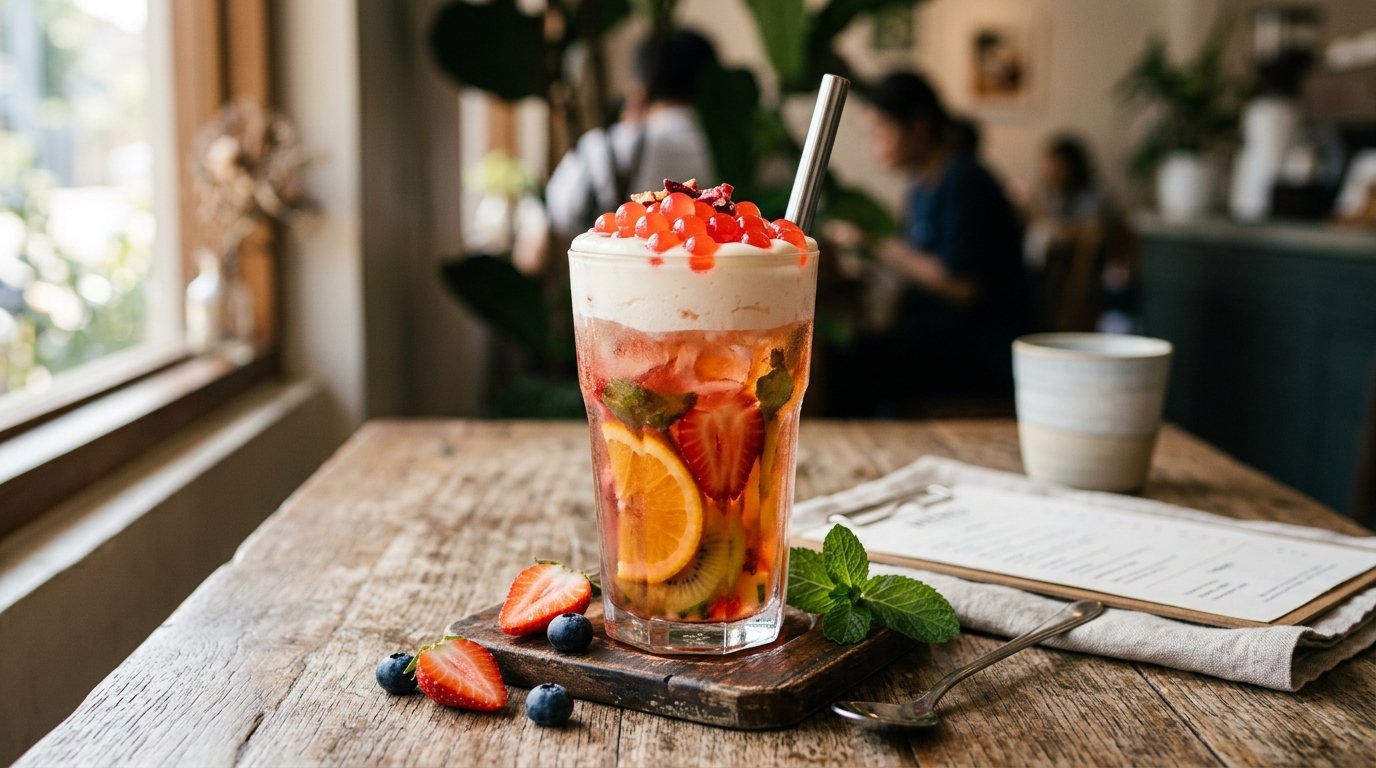
In Asian street markets, chilled basil seed coolers provide the same cooling hydration as Central American fresh fruit aguas frescas.
Low in calories, high in volume. Basil seeds are mostly fiber and water once soaked, so a serving fills you up without adding much to your calorie count. If you're building a nutrition label for your own product, check the exact calorie count against your specific recipe rather than a general estimate, since added sweeteners or mix ins change the number fast.
A traditional cooling food. In Ayurvedic tradition, basil seeds are classified as a sheetal, or cooling, food, used for centuries to calm body heat and settle stomach acidity during hot months. That's part of why basil seed drinks show up so often across South Asia and the Middle East in the warmer seasons.
Steadier blood sugar. Because the fiber in basil seeds turns so thick and gel like once soaked, it slows down how fast carbs get digested. That can help soften the blood sugar spike that often follows a sugary meal or drink.
Minerals you actually need. One tablespoon supplies around 10 percent of your daily calcium, 10 percent of your daily magnesium, and 12 percent of your daily iron. That's a solid contribution from something you're mostly drinking for the texture.
None of this makes basil seed drinks a cure for anything, and no single food should be treated that way. But as a low calorie, fiber dense addition to your day, the science backs them up.
Why You Should Never Eat Basil Seeds Dry
This is the part most articles gloss over, and it's the one that matters most.
Dry basil seeds absorb water fast and expand a lot. If you swallow them dry, or drink them before they've fully soaked, they can keep swelling once they reach your throat. That creates a real choking risk, especially if the seeds clump together into a sticky mass. This is a documented concern, not just a caution label written for the sake of it.
The fix is simple. Always soak basil seeds in liquid for at least 5 to 10 minutes, until every seed has clearly formed its gel coating, before you eat or drink them. Never add dry seeds straight into a drink you're about to sip right away.
If you're trying basil seeds for the first time, start slow. Try a teaspoon a day and drink plenty of water alongside it. The fiber content is high, and too much too soon can cause bloating or gas. Your gut usually adjusts within a few days.
This article is for general information and isn't a substitute for medical advice. If you have swallowing difficulties or a digestive condition, check with a doctor before adding basil seeds to your diet.
What Do Basil Seeds Taste Like? Texture, Flavor, and Boba Pearl Comparison
On their own, raw soaked basil seeds (sabja) are virtually flavorless, carrying only a faint, earthy herbal whisper. Their true sensory appeal lies entirely in their remarkable dual-layer texture:
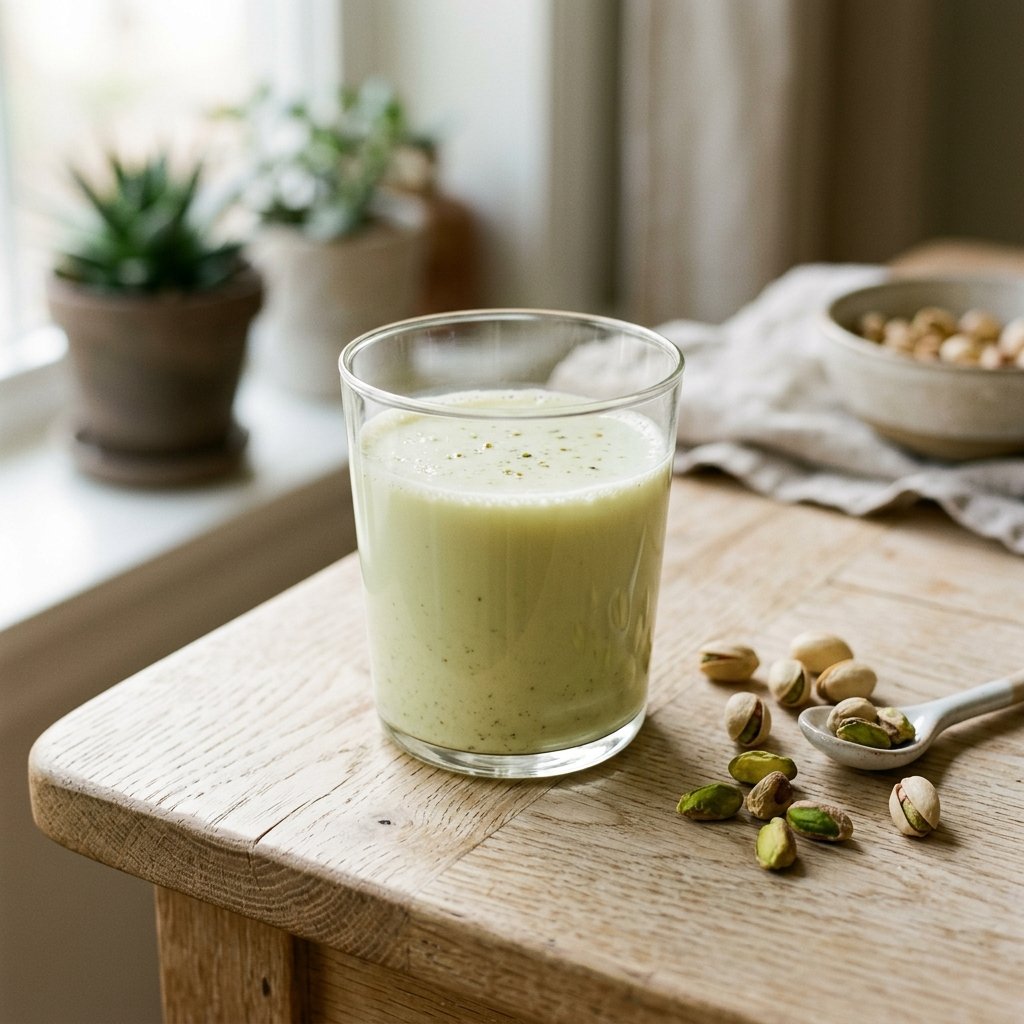
In classic Falooda dessert drinks, soaked basil seeds are layered with rich milk, which can be made dairy-free using creamy pistachio milk.
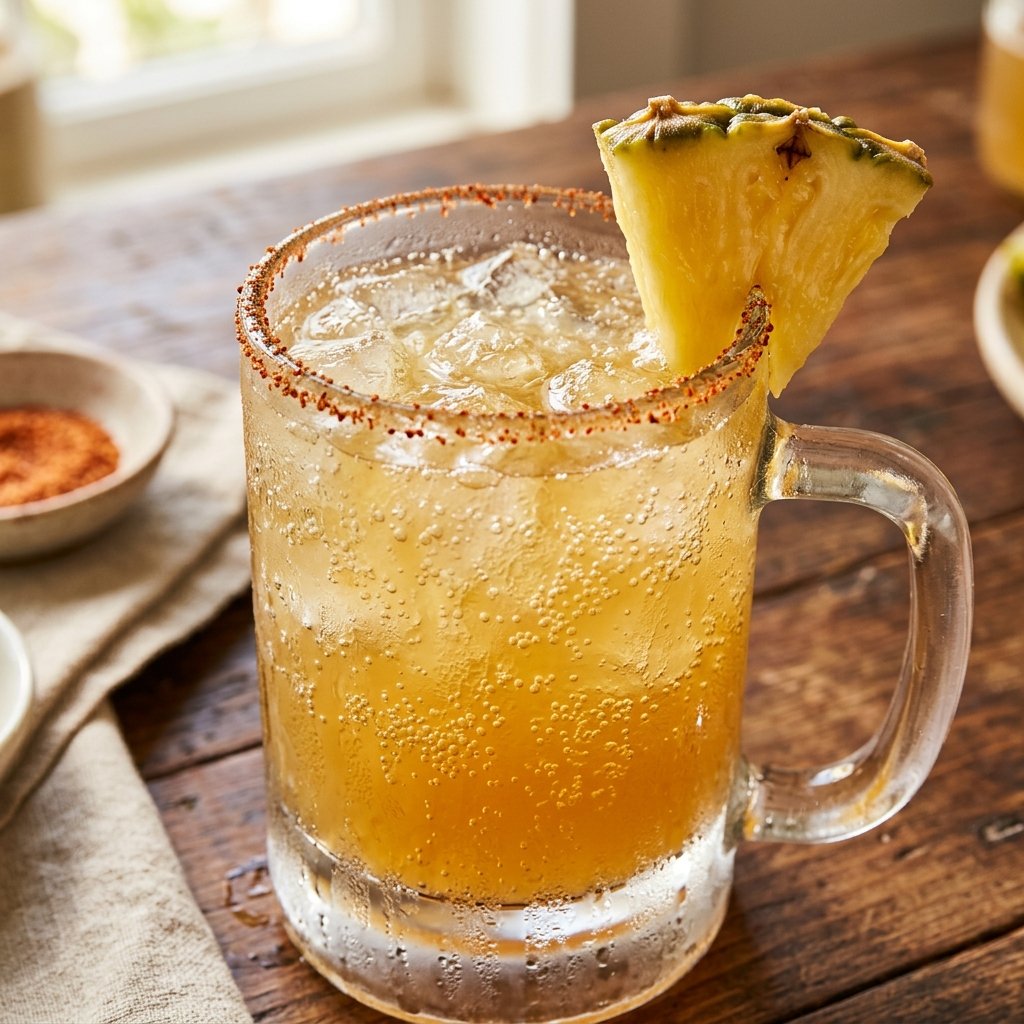
In street food culture, basil seed drinks and naturally fermented pineapple tepache both serve as traditional digestive coolers.
- Outer Jelly Gel: Soft, slippery, translucent, and cooling as it glides across the tongue.
- Inner Seed Core: Provides a delicate, satisfying poppy crunch similar to dragon fruit or kiwi seeds.
Basil Seeds vs. Boba Pearls: Unlike chewy starch tapioca boba pearls (which add 150–200 calories of carbohydrate density), basil seeds provide a fun textured mouthfeel with high prebiotic soluble fiber and almost zero net calories.
For other refreshing cold drinks, see our guide on how to make easy fruit refreshers at home.
Traditional Basil Seed Drinks From Around the World
Basil seeds didn't start out as a health food trend. They've been a staple drink ingredient across several cultures for a long time.
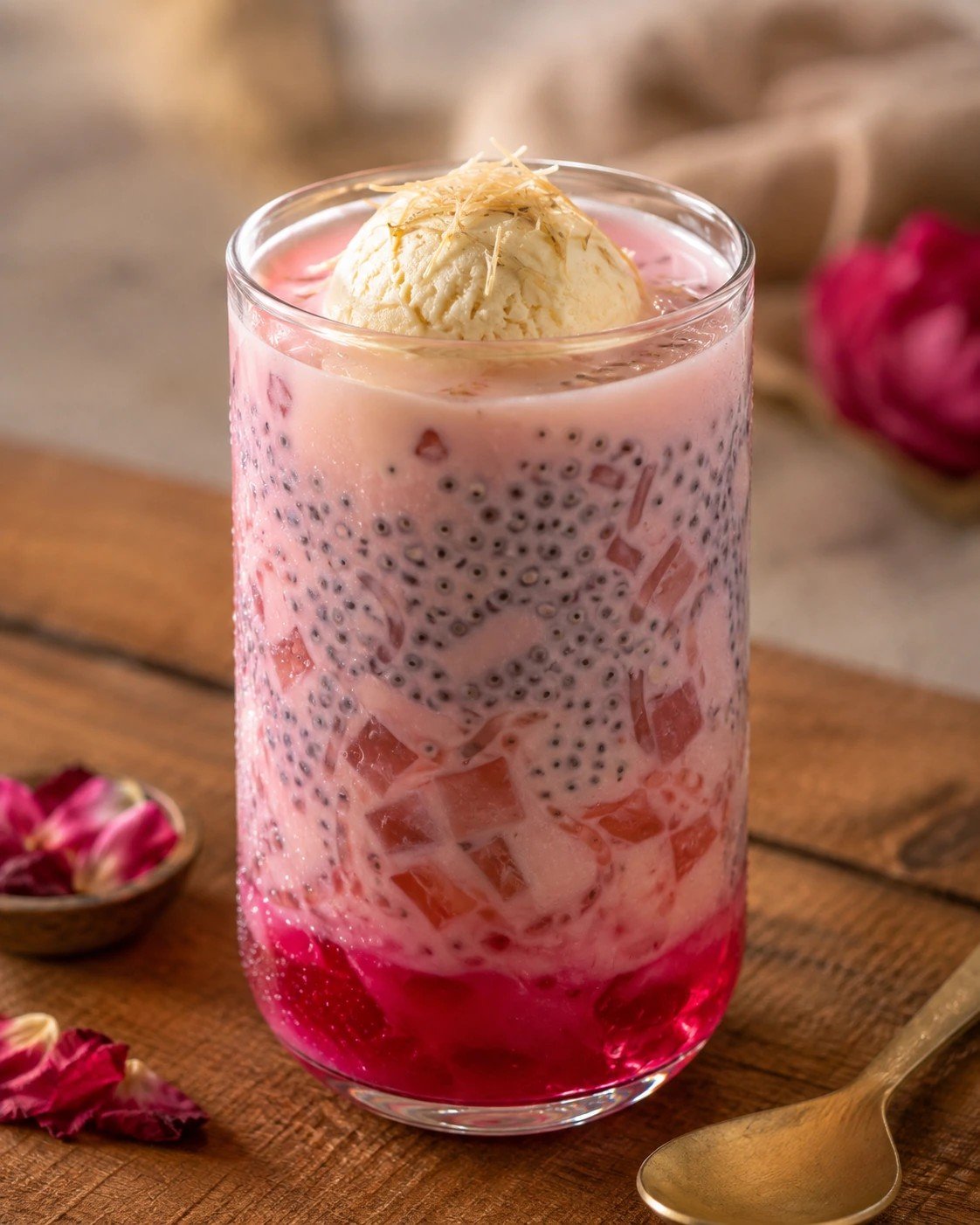
Falooda, from India and Pakistan. Probably the most recognizable basil seed drink outside its home region. Sabja seeds are layered with rose syrup, often the brand Rooh Afza, chilled whole milk, thin vermicelli noodles, and a scoop of kulfi ice cream on top. It's part drink, part dessert.
Tokhm-e Sharbati, from Iran. A quieter, more floral cooler. Soaked basil seeds are stirred into rosewater with a few strands of bloomed saffron, fresh lime juice, and honey. It's traditionally served during hot Persian summers as a way to cool down without anything heavy.
Nam Manglak, from Thailand. A tropical street drink built around coconut water, lime juice, sweet pandan syrup, and basil seeds. It's lighter and fruitier than the Indian or Persian versions, and a good starting point if you want something closer to a fruit drink than a dessert.
Each of these traditions solved the same problem in its own way: how to stay cool and hydrated with a simple, local ingredient. Worth keeping in mind next time someone calls basil seeds a brand new wellness trend.
How to Make a Basil Seed Drink at Home
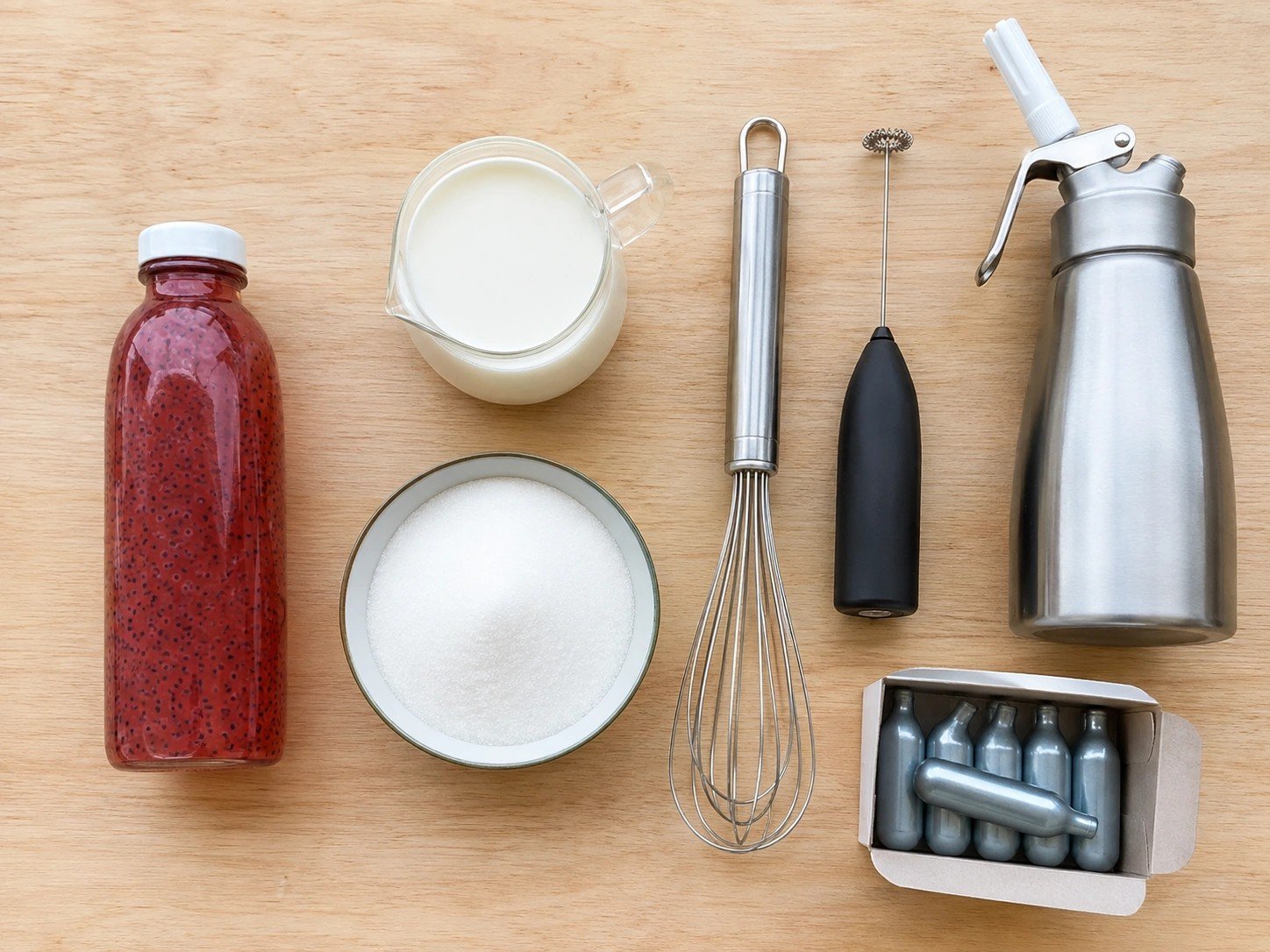
The base ratio stays the same no matter what flavor you're after.
Universal soaking formula: Combine 1 tablespoon of dry basil seeds with half a cup of cold water. Let it sit for 5 to 10 minutes, until every seed has swelled and turned clear.
Once your seeds are soaked, try any of these:
Lemon mint daily cooler. Mix 2 tablespoons of soaked basil seeds with 1.5 cups of cold water, the juice of one lemon, 1 tablespoon of honey, and 4 fresh mint leaves. Pour over ice.
Persian rose sharbat. Stir 2 tablespoons of soaked seeds into 1.5 cups of cold water, 1 tablespoon of rosewater, 1 tablespoon of lime juice, 1 tablespoon of honey, and a small pinch of bloomed saffron.
Iced coconut matcha boba. Layer 2 tablespoons of soaked basil seeds with 6 ounces of coconut milk, ice, and 2 ounces of whisked ceremonial matcha. This one leans closer to a modern cafe drink than a traditional one, but it uses the same soaking method as the rest.
All three take under 10 minutes once your seeds are soaked, and none of them need a stove.
Storage, Shelf Life, and What to Look For in Store Bought Bottles
Once soaked, basil seeds don't keep forever. Store them in an airtight glass jar in the fridge and use them within 4 to 5 days. Skip the freezer, since freezing breaks down the gel coating and leaves you with a mushy texture once thawed.
If you'd rather buy a ready made bottle instead of soaking your own, read the label closely. Brands like Zen Basil lean into an organic, clean label approach, while Vinut and Rita bottle more traditional Southeast Asian fruit juice blends built around basil seeds. Basil seed drinks sold in the US often include added cane sugar, and not always in small amounts. Some retail bottles carry 20 to 30 grams of added sugar per serving, which cancels out a good chunk of the blood sugar benefit the seeds themselves offer. Look for a short, clean ingredient list, and don't assume "basil seed drink" on the front of the bottle means low sugar by default.
Sabja seeds can be suspended in sparkling water flavored with sweet pomegranate grenadine syrup for a vivid red jewel appearance.
Glass-bottled basil seed drinks are high-velocity items within commercial ready-to-drink beverages for importers.
Frequently Asked Questions
❓ What is a basil seed drink?
A basil seed drink is made by soaking sweet basil seeds in liquid until they form a soft, clear gel coating around each seed. The seeds carry almost no flavor of their own, so the drink takes on the taste of whatever you soak them in.
❓ Can you eat basil seeds without soaking them?
No. Dry, unsoaked basil seeds absorb moisture fast and can swell inside your throat, which creates a choking hazard. Always soak them in liquid for 5 to 10 minutes before eating or drinking them.
❓ Are basil seeds the same as chia seeds?
No. Basil seeds come from Ocimum basilicum and hydrate within about 5 minutes, with a fiber profile heavy on the soluble side. Chia seeds come from Salvia hispanica, take 20 to 30 minutes to hydrate, and are better known for omega-3 content.
❓ What do basil seeds taste like?
Almost nothing on their own, which is the whole point. They pick up the flavor of whatever liquid surrounds them, whether that's lemonade, rose syrup, or coconut milk, while adding a light, poppy seed-like crunch in the center.
❓ Are basil seed drinks healthy, or just full of sugar?
The seeds themselves are low calorie and high in fiber. The sugar concern comes from what you mix them with, especially store-bought bottles that add cane sugar. Made at home with lemon, mint, or a light syrup, a basil seed drink stays low in added sugar.
❓ Why do basil seeds swell in water?
The outer coat of each seed is packed with compounds that pull in moisture and lock it into a gel structure. That reaction starts within seconds of contact with liquid and finishes within 5 to 10 minutes, which is why soaked basil seeds develop that soft, clear gel layer.
Sources and Scientific References
- Food Hydrocolloids Journal: Mucilage extraction, rheological properties, and hydrocolloid gel kinetics of sweet basil seeds (Ocimum basilicum). [PubMed Central]
- USDA FoodData Central: Nutritional profile, dietary soluble fiber, and mineral content of whole basil seeds and chia seeds. [FoodData Central]
- Journal of Functional Foods: Prebiotic potential, glycemic regulation, and digestive health benefits of plant seed mucilage. [Journal of Functional Foods]
- Ayurvedic Pharmacopoeia & Traditional Medicine Review: Sheetal cooling properties and traditional beverage formulations of Tukmaria / Sabja seeds.
Safety & Choking Warning: Always soak basil seeds completely in liquid for 5 to 10 minutes until their clear gel coating forms before consuming. Never swallow dry basil seeds. Individuals with swallowing difficulties or esophageal conditions should exercise caution.
Related Beverage & Sourcing Guides
Explore our practical guides on drink recipes, market selection, and commercial beverage development: