What is grenadine, really? If you've ordered a Shirley Temple or a Tequila Sunrise at a bar in the United States, you've watched the bartender reach for a bottle of bright red syrup. Most people take one sip, taste something sweet and fruity, and assume it's cherry syrup. They're wrong. Grenadine has nothing to do with cherries. It's made from pomegranates, and bartenders have used it this way for centuries.
Quick answer: Grenadine is a non-alcoholic, ruby-red syrup made by mixing sugar into pure pomegranate juice, sometimes finished with a splash of lemon juice or orange blossom water. The flavor is sweet and tart at once, with berry and floral notes, nothing like the flat, candied taste of cherry syrup. It contains zero alcohol, and because it's so dense with sugar, it sinks straight to the bottom of a glass. That density is exactly why drinks like the Tequila Sunrise get their layered look.
Because grenadine is alcohol-free, it works just as well in classic cocktails as it does in kid-friendly mocktails. Not all grenadine is made the same way, though. Walk down a grocery store aisle and you'll find bottles with no real fruit in them at all, just corn syrup, food coloring, and artificial flavor. Real grenadine, whether store-bought or homemade, comes from actual pomegranate juice, which is what gives it natural fruit acid and an honest flavor you can taste.
This guide covers what grenadine actually is, why pomegranates are the real star ingredient, the science behind those dramatic layered drinks, the best classic cocktails and mocktails that use it, and two different ways to make it at home. The details below reflect real bar recipes and basic food chemistry, the same information any working bartender relies on.
What Is Grenadine Made Of? Real Pomegranate vs. Commercial Syrups
The word grenadine comes from the French word for pomegranate, grenade, which itself comes from the Spanish granada and the Latin plant name Punica granatum. European bartenders once pressed fresh pomegranate seeds by hand to pull out the tart red juice, then stirred in sugar to help it keep. That basic method hasn't changed much in hundreds of years.
Grenadine’s sweet pomegranate tang shares flavor profiles with traditional Latin American agua de jamaica and fruit waters.
Why Does Everyone Think Grenadine Is Cherry?
This mix-up happens for three main reasons.
- The maraschino cherry garnish. For close to a hundred years, American diners have served Shirley Temples and Roy Rogers with a bright red maraschino cherry on top. People connect the red syrup with the red cherry sitting right next to it.
- Artificial Red 40 dye. Many mass-market brands use a synthetic dye called Red 40, which looks almost identical to the dye used in maraschino cherry juice. Visually, the two are hard to tell apart.
- Real fruit disappeared from mass production. Starting in the mid-1900s, big beverage companies replaced pomegranate juice with water, corn syrup, citric acid, and artificial flavoring, since it was far cheaper to produce at scale.
Real Craft Grenadine vs. Commercial Syrups
Check the label before you buy. If corn syrup is listed before pomegranate juice, you're holding a candy-flavored syrup, not real grenadine.
What Does Grenadine Taste Like?
So what flavor is grenadine, exactly? It tastes close to pomegranate molasses mixed with fresh fruit juice: a rich, sweet burst up front, followed by a sharp tartness that keeps it from turning cloying.
Texture matters here too. Good grenadine feels thick and silky, coating the tongue without turning sticky or heavy.
Acid is the part most people overlook. A well-made cocktail syrup needs to do two jobs at once: add sweetness and add acid. Grenadine delivers natural citric and malic acid straight from the pomegranate, along with polyphenols, the same antioxidants found in pomegranate juice. Together, these balance out strong spirits like tequila, gin, and rum instead of just piling on more sweetness.
What Flavor Is Grenadine? Why People Confuse Pomegranate with Cherry
One of the most persistent mixology myths is that grenadine is cherry-flavored syrup. In reality, authentic grenadine gets its name from the French word for pomegranate (grenade). True grenadine tastes rich, tart, sweet, and tannic with bright berry-citrus undertones, exactly like freshly reduced pomegranate juice.
Mixing real grenadine with fiery brewed ginger beer creates a spicy, ruby-colored Shirley Temple variation.
The widespread confusion stems from mass-produced commercial bar syrups (such as Rose's). For decades, industrial bottlers replaced pure pomegranate juice with high fructose corn syrup, citric acid, artificial flavorings, and Red #40 dye. This created a candy-sweet, artificial profile that resembles maraschino cherry syrup rather than real pomegranate.
Does Grenadine Have Alcohol? Non-Alcoholic Mocktails and Kid-Friendly Drinks
No, pure grenadine syrup contains zero alcohol (0.0% ABV). It is classified as a culinary and bar flavoring syrup made strictly by simmering fruit juice with sugar. Because it contains no alcohol, grenadine is the foundation of famous alcohol-free family and mocktail drinks worldwide:
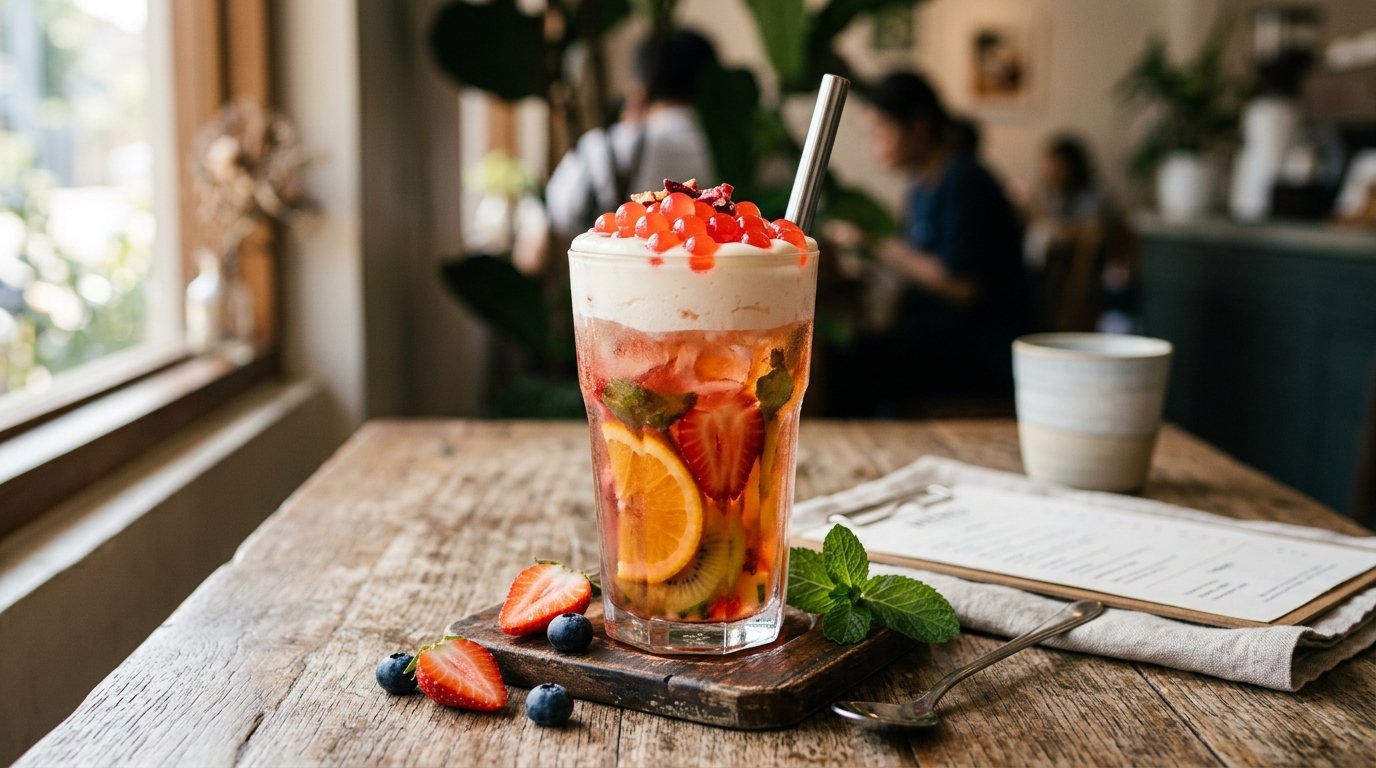
A drizzle of craft grenadine adds vibrant color and berry-like notes to drinks made with our easy homemade fruit refreshers guide.
- Shirley Temple: Ginger ale or lemon-lime soda topped with a splash of grenadine and a maraschino cherry.
- Roy Rogers: Cola mixed with grenadine syrup for a rich, fruity vanilla cola twist.
- Virgin Sunrise: Fresh orange juice layered over ice with a dense base layer of grenadine creating an ombre sunrise effect.
The Science of Layered Drinks: Why Grenadine Sinks
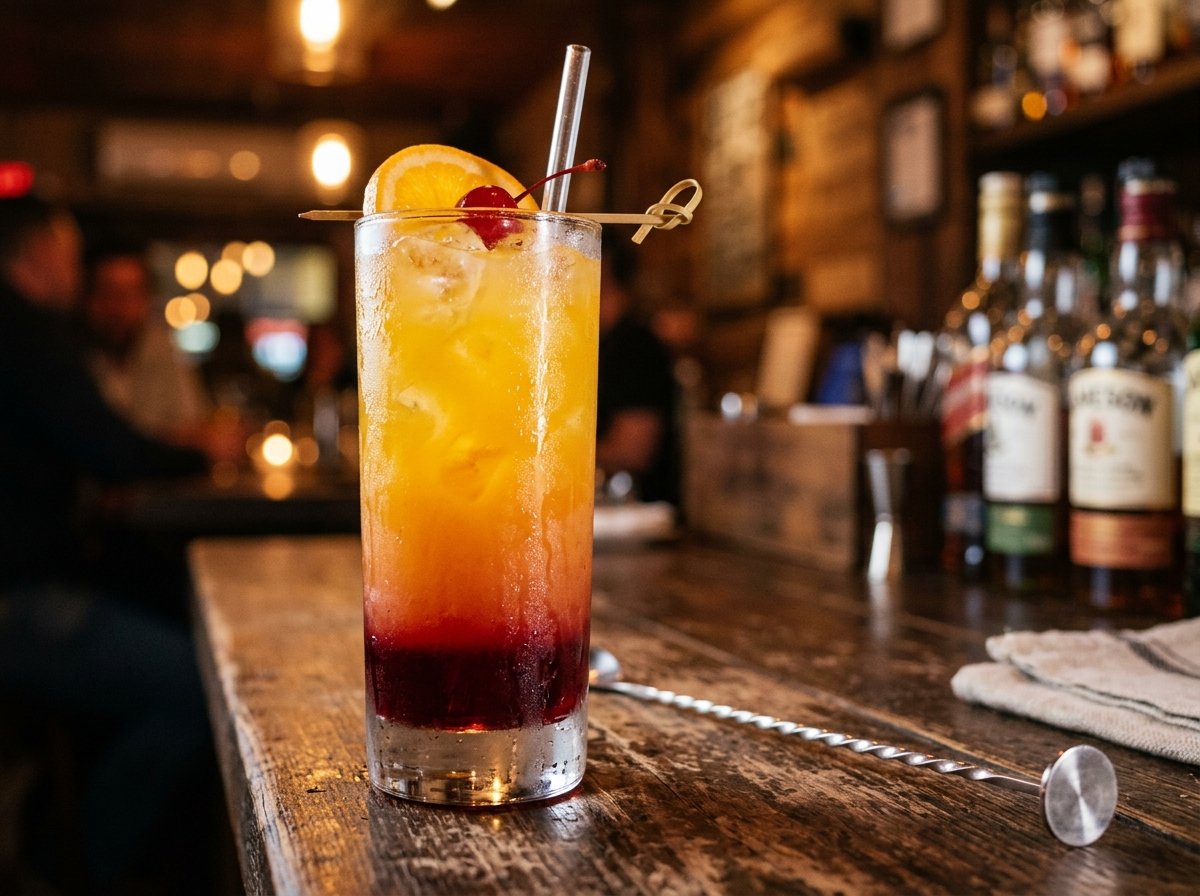
Why does grenadine sink instead of mixing in? It comes down to specific gravity, a simple way of comparing how heavy a liquid is against plain water, which sits at 1.000 grams per milliliter.
- Alcohol floats. Pure ethanol weighs about 0.789 g/ml, and most spirits land near 0.950 g/ml once diluted to drinking strength.
- Citrus juice sits in the middle. Dissolved sugar and fruit solids push its density to around 1.040 g/ml.
- Grenadine sinks. Packed with sugar at 50 to 65 degrees Brix, it reaches a density of roughly 1.300 g/ml.
Because grenadine outweighs both alcohol and juice, it drops straight through a drink and settles at the bottom of the glass. That weight difference is the entire secret behind the sunrise effect in a Tequila Sunrise.
The Bartender's Pouring Technique
- Fill a glass with ice, then pour in your spirit and chilled orange juice. Give it a gentle stir.
- Hold a bar spoon upside down against the inside wall of the glass, just above the surface of the liquid.
- Pour the grenadine slowly down the twisted handle of the spoon. It will glide down the glass wall and settle neatly at the bottom instead of blending in.
Famous Drinks Made With Grenadine

- The Jack Rose: 2 oz applejack or Calvados, 3/4 oz fresh lemon juice, 1/2 oz grenadine. Shake with ice and strain into a chilled coupe glass for a crisp apple and berry combo.
- The Tequila Sunrise: 2 oz blanco tequila, 4 oz fresh orange juice, 1/2 oz grenadine poured slowly down the glass so it sinks to the bottom.
- The Ward 8: 2 oz rye whiskey, 3/4 oz lemon juice, 3/4 oz orange juice, 1/2 oz grenadine.
- The Shirley Temple: Ginger ale or lemon-lime soda over ice with 1/2 oz grenadine, topped with a maraschino cherry.
- The Roy Rogers: Cola over ice with 1/2 oz grenadine, giving it a cherry-cola flavor kids and adults both enjoy.
How to Make Authentic Grenadine at Home
There are two ways to make real grenadine, and they don't taste exactly the same. The method you pick changes the final flavor, so it helps to know both before you start.
Method 1: The Cold-Process Method (No Stove Required)
This is the fastest option, and it keeps the juice tasting fresh and bright since heat never touches it.
Ingredients:
- 1 cup (240 ml) 100% pure unsweetened pomegranate juice, such as POM Wonderful
- 1 cup (200 g) granulated white cane sugar
- 1/2 tsp fresh lemon juice
- Optional: 2 drops orange blossom water or 1/2 tsp pomegranate molasses for extra depth
Steps:
1. Pour the pomegranate juice and sugar into a blender or a clean glass jar.
2. Blend on medium speed for about 60 seconds, or shake the jar hard, until the sugar fully dissolves.
3. Stir in the lemon juice and the orange blossom water if you're using it.
4. Pour into a glass bottle and refrigerate.
You'll end up with about 1.5 cups of syrup, enough for a dozen or more drinks.
Method 2: The Cooked Reduction Method (Stovetop)
This method takes a bit longer, but heat pulls more flavor out of the juice and helps the syrup keep even longer in the fridge.
Steps:
1. Pour equal parts pomegranate juice and sugar into a small saucepan over medium heat.
2. Stir until the sugar fully dissolves, then let the mixture come to a light simmer, not a hard boil.
3. Simmer for a few minutes so the juice reduces slightly and the flavor concentrates.
4. Remove from heat, let it cool completely, then stir in a small splash of lemon juice.
5. Pour into a glass bottle once cooled and refrigerate.
Cold-process versus cooked, what's the real difference? Cold-process grenadine tastes closer to raw pomegranate juice: light and fruity. The cooked version tastes deeper and slightly more like pomegranate molasses, since heat concentrates the sugars and breaks down some of the fruit's natural pectin. Neither one is wrong. Bartenders who want a brighter mixer usually go cold-process, while bartenders who want a richer syrup for sipping drinks tend to cook theirs.
Storage, Shelf Life, and Preservation
Homemade grenadine and real craft brands need to stay in the fridge once opened. A standard batch made at a 1:1 ratio of sugar to juice lasts about 3 to 4 weeks when stored between 35°F and 38°F.
Want it to last longer? Try the trick many bartenders use: add 1/2 oz (1 tbsp) of high-proof neutral vodka to the bottle. The alcohol acts as a natural preservative and can stretch the shelf life out to around 6 months, without changing how the syrup tastes.
For an effortless summer mocktail, mixing real pomegranate grenadine with chilled effervescent club soda creates a crisp, naturally vibrant red spritzer.
Developing proprietary bar syrups and mixers is a popular entry point when learning how to build a private label beverage brand.
Frequently Asked Questions
❓ What is grenadine made of?
Bartenders make real grenadine by dissolving sugar into pure pomegranate juice, often with a small amount of lemon juice added for balance.
❓ Is grenadine cherry or pomegranate?
It is pomegranate. The cherry idea comes from maraschino cherry garnishes and red food dye, not from the actual ingredients.
❓ Does grenadine contain alcohol?
No. Grenadine sits at 0.0% ABV, and bartenders use it in both alcoholic cocktails and non-alcoholic mocktails.
❓ Why does grenadine sink to the bottom of drinks?
Grenadine is much denser than alcohol or juice because of its high sugar content (50 to 65 Brix), so it settles below both when poured slowly into a glass.
❓ How do you make homemade grenadine with POM Wonderful?
Mix equal parts POM Wonderful 100% pomegranate juice and granulated sugar, blend or shake until dissolved, then add a small splash of lemon juice before bottling.
❓ Is Rose's grenadine the same as real grenadine?
No. Rose's and similar mass-market brands rely mostly on high-fructose corn syrup and artificial coloring, with little or no real pomegranate juice, so the flavor and quality don't come close to authentic grenadine.
❓ Does grenadine need to be refrigerated?
Yes, once opened. Real grenadine made with fruit juice spoils faster than shelf-stable artificial versions, so keep it cold and use it within 3 to 4 weeks unless you have added a splash of neutral spirits as a preservative.
❓ Should I make grenadine on the stove or without heat?
Both work. The no-heat method keeps the juice tasting fresh and light, while the stovetop method concentrates the flavor into something closer to pomegranate molasses. Pick based on whether you want a bright mixer or a richer syrup.
❓ How long does real pomegranate grenadine last after opening?
Commercial bottled grenadine with preservatives lasts up to 1 year in a cool pantry or refrigerator. Authentic homemade pomegranate grenadine (1:1 sugar ratio) should always be refrigerated and consumed within 1 to 2 months, or up to 4 months if fortified with 1 tablespoon of high-proof neutral spirit.
❓ Can grenadine curdle dairy or cream in cocktails?
In classic bar craft, real grenadine is commonly stocked alongside almond and orange blossom orgeat to create balanced layers of fruit tartness and creamy nut sweetness.
Yes. Real grenadine is naturally acidic because it is made from tart pomegranate juice. When combined directly with dairy milk or heavy cream in cocktails without proper dilution or temperature moderation, the natural fruit acids can cause milk proteins to curdle.
The Bottom Line
Real grenadine is a tart, complex pomegranate syrup that adds essential color, acidity, and natural fruit flavor to classic cocktails and mocktails. It contains zero alcohol and zero cherries, and its high sugar density is the secret behind layered drinks like the Tequila Sunrise.
Whether you buy a craft brand or make a quick 5-minute batch at home with pure pomegranate juice, real grenadine elevates drinks far beyond what artificial mass-market syrups can offer.
Why Trust This Guide
Every technique and figure in this guide, from the density numbers to the pouring method, reflects standard practice in professional bar service and basic food chemistry. Nothing here is guesswork, and nothing is dressed up to sound more impressive than it actually is.
Sources and Scientific References
- International Bartenders Association (IBA): Official Cocktail Recipe Specifications: The Tequila Sunrise, Jack Rose, and Ward 8. [IBA-World.com]
- USDA FoodData Central: Nutritional Profile and Polyphenol Content of 100% Pomegranate Juice (Punica granatum). [FoodData Central]
- Journal of Food Science: Specific gravity, Brix density dynamics, and layering kinetics in cocktail syrup preparation. [PubMed Central]
- Oxford Companion to Spirits and Cocktails: Historical evolution of pomegranate cordial and commercial syrup adulteration in the 20th century.
Quality Notice: Authentic grenadine is 0.0% ABV and derived from real pomegranate juice. Check commercial bottle labels to ensure real fruit juice is used rather than high-fructose corn syrup and artificial food dyes.
Related Beverage & Sourcing Guides
Explore our practical guides on drink recipes, market selection, and commercial beverage development: