Most people discover tepache by accident. They spot the golden, fizzy drink at a Mexican taqueria or stumble across it at a specialty grocery store. Then they taste it and immediately want to know two things: what is it, and how do I make it at home?
Quick answer: Tepache is a traditional Mexican fermented drink made from pineapple rinds, unrefined cane sugar (piloncillo), filtered water, and warm spices like cinnamon and cloves. Wild yeasts and lactic acid bacteria living on the pineapple skin ferment the mixture in two to four days. The result is a sweet, tangy, gently fizzy beverage with an alcohol content between 0.5% and 2.0% ABV.
Tepache is one of the most beginner-friendly fermented drinks you can make at home, and it is genuinely zero-waste. The part of the pineapple you would normally throw away, the rind and core, is the only part you actually need. The flesh goes straight to your table while the scraps go into the jar.
Tepache is not a medical supplement or a probiotic cure-all. It is a living fermented food, much like kombucha or water kefir, that contains naturally occurring beneficial microorganisms. It also contains trace alcohol from fermentation. If you are pregnant, managing blood sugar, or avoiding alcohol, read the health and safety section of this guide before brewing.
What Does Tepache Taste Like?
Tepache surprises most people on the first sip. It is sweet but not cloying, tart but not sharp or vinegary, and gently fizzy rather than aggressively carbonated like soda.
Tepache can be topped with sparkling club soda for an extra bubbly summer spritzer.
The best way to picture it: imagine fresh pineapple juice that has been lightly fermented, then spiced with cinnamon and a touch of cloves. Fermentation softens the raw sweetness of the fruit and adds a clean, refreshing acidity. When piloncillo is used as the sweetener, it contributes earthy molasses undertones that push the drink well beyond what plain white sugar delivers.
The tasting notes break down like this:
- Sweetness: Tropical fruit sweetness up front, mellow and round rather than sharp
- Acidity: A clean citrus-like tang in the middle; similar to mild apple cider
- Spice: Warm cinnamon and clove aromatics in the background
- Finish: Dry, slightly yeasty, with a subtle earthiness from the piloncillo
- Texture: Lightly fizzy with fine natural bubbles; more like sparkling water than soda
Tepache is not a strongly alcoholic drink. At standard fermentation times, you will not taste a sharp alcohol burn. What you will taste is balance, depth, and a thirst-quenching quality that is harder to find in most commercial drinks.
The taste changes significantly over the fermentation window. At 24 hours it is sweet and lightly yeasty. At 48 to 72 hours it reaches peak balance. Beyond four days at room temperature it tips into strong sourness and eventually becomes pineapple vinegar. That progression is entirely predictable once you understand the science behind it.
The Cultural History of Mexican Tepache
Tepache is one of the oldest fermented beverages still being consumed in the Americas. Its story stretches back to pre-Columbian Mexico, and its evolution tracks the sweeping cultural changes that followed colonial contact.
From Corn to Pineapple: The Pre-Columbian Origins
The word tepache comes from the Nahuatl word tepiatl, which translates as "drink made from corn." The indigenous Nahua and Aztec peoples fermented ground maize in clay vessels called ollas de barro to create an early version of the drink. This corn-based tepiatl was not purely recreational. It held ritual and ceremonial significance, consumed during agricultural festivals, religious observances, and community gatherings.
Other Mesoamerican cultures, including the Maya in the Yucatan Peninsula and the Purépecha in Michoacán, developed their own parallel traditions of fermenting locally available starches and fruits. The common thread was using whatever natural materials were available, combined with the wild microorganisms living in the local environment, to create a sustaining and flavorful fermented beverage.
The Colonial Shift: Corn Becomes Pineapple
After the Spanish arrived in Mexico in the early 16th century, trade routes introduced new crops, new sugars, and new culinary ingredients to the indigenous food system. Pineapple (piña), which grows abundantly across tropical and subtropical Mexico, gradually replaced maize as the primary fermentation base.
The reasons were practical. Pineapple skins are rich in natural wild yeasts and bacteria, which makes them ideal for spontaneous fermentation without any added starter culture. Piloncillo, the unrefined whole cane sugar introduced through colonial agriculture, dissolved easily in water and fed the fermentation efficiently. The combination of pineapple rinds, piloncillo, cinnamon, and water became the stable formula that is still used today.
Traditional Street Food: Tepacherías and the Vendor Culture
By the 19th and early 20th centuries, tepache had become deeply embedded in Mexican street food culture. Specialized vendors known as tepacheros brewed and sold the drink from large charred wooden barrels called barriles de roble (oak barrels), which added subtle vanilla and smoky notes absent from home-brewed versions. These street stalls, called tepacherías, were concentrated in urban markets, neighborhood plazas, and street food corridors across Mexico City, Jalisco, Puebla, and Oaxaca.
Traditionally, tepache was served ice-cold in a plastic bag tied around a straw, or ladled into clay mugs and topped with a pinch of chili-lime salt (Tajín). The drink sat alongside tacos, elotes, and other street food staples as a refreshing counterpoint to rich, savory flavors.
Modern Tepache: From Street Stall to Global Market
Tepache found a wide new audience in the United States over the past decade. Home fermentation communities, fueled by growing interest in kombucha, kefir, and probiotic foods, discovered tepache as a beginner-friendly alternative with a short brewing window and accessible ingredients.
Simultaneously, commercial producers like De La Calle brought canned, ready-to-drink tepache to major US retailers including Whole Foods, Target, and Walmart. The commercial push introduced the drink to millions of Americans who might never have encountered it through traditional Mexican food culture.
The expansion created a useful distinction worth understanding: traditional artisanal tepache (brewed in wooden barrels, served fresh, regionally variable) and modern commercial tepache (pasteurized, standardized, shelf-stable or refrigerated). Both have value, and both are covered in this guide.
The Fermentation Science Behind Tepache
Understanding what actually happens inside the jar during fermentation is not just interesting. It directly helps you brew a better, safer, and more consistent product.
Tepache’s wild fermentation from pineapple rinds and piloncillo sugar is botanically similar to craft naturally fermented ginger beer.
Wild Fermentation: How It Works
Tepache relies on wild fermentation rather than a controlled starter culture. This means you are not adding a packet of dry yeast or a specific probiotic strain to your jar. Instead, the fermentation is initiated entirely by the microorganisms that live naturally on the surface of the pineapple rind and in the ambient air.
This is the same principle behind sourdough bread starters, traditional kimchi, and wild-fermented cider. The microbial community is diverse, locally variable, and sensitive to environmental conditions like temperature, sugar concentration, and sanitation.
The Key Microorganisms
Research into tepache fermentation, including studies indexed in the NIH's PubMed database and peer-reviewed food science journals, has identified the specific microbial communities responsible for the drink's flavor, carbonation, and probiotic properties.
Lactic Acid Bacteria (LAB):
The bacterial component of tepache fermentation is dominated by lactic acid bacteria. Key species identified in scientific literature include:
- Lactiplantibacillus plantarum (formerly Lactobacillus plantarum): The most consistently identified species; responsible for lactic acid production, which drops the pH of the beverage and creates its characteristic tang.
- Lactobacillus pentosus: A secondary LAB species that contributes to flavor complexity.
- Lacticaseibacillus paracasei (formerly Lactobacillus paracasei): A resilient strain identified in tepache research that supports LAB population stability across the full fermentation window.
- Leuconostoc mesenteroides: Active in the early stage of fermentation; produces CO2 and creates a mildly viscous texture in some batches. High concentrations at cool temperatures can cause a thick or syrupy consistency.
- Lactococcus lactis: A common LAB strain that contributes mild acidity.
- Acetobacter species: Acetic acid bacteria that appear in later fermentation stages and drive the beverage toward a vinegary profile if fermentation continues past the ideal window.
Wild Yeasts:
Yeasts are responsible for converting dissolved sugars into ethanol (alcohol) and carbon dioxide (carbonation). Key yeast species identified in tepache include:
- Saccharomyces cerevisiae: The most dominant and most studied yeast in tepache. The same species used in bread baking and beer brewing. It produces ethanol and CO2 efficiently and tolerates the mild acidity created by LAB.
- Zygosaccharomyces species: A secondary yeast that can contribute fruity esters to the flavor profile.
- Meyerozyma and Candida species: Non-Saccharomyces yeasts present in varying concentrations depending on the pineapple source and ambient conditions.
- Gibberella, Talaromyces, Epicoccum, and Kabatiella species: Minor fungal community members identified in research. These are far less dominant than Saccharomyces and contribute trace aromatic compounds. Their presence highlights how genuinely diverse and locally variable the wild fermentation ecosystem on a single pineapple rind actually is.
The Two Fermentation Stages
Tepache fermentation progresses through two predictable stages:
Stage 1 (Hours 0 to 48): Primary Sugar Conversion
Lactic acid bacteria and wild yeasts begin consuming the dissolved piloncillo and the natural sugars present in the pineapple flesh attached to the rind. LAB converts sugars into lactic acid, which lowers the pH and gradually acidifies the liquid. Simultaneously, yeasts convert sugars into ethanol and CO2. At this stage, the beverage is visibly active with rising bubbles, a frothy white head, and a developing tangy aroma.
Stage 2 (Hours 48 to 96+): Acid Accumulation and Alcohol Development
As primary sugars are consumed, acetic acid bacteria become more active. These bacteria convert the ethanol produced by yeast into acetic acid (the compound responsible for vinegar flavor). If fermentation is stopped between 48 and 72 hours by refrigeration, the beverage retains a balanced sweet-tart profile. If fermentation continues past 96 hours at warm temperatures, acetic acid accumulates rapidly, and the beverage crosses into pineapple vinegar territory.
A note on antibiotic resistance (2024 research): A 2024 study indexed in the NIH literature database identified antibiotic-resistant microorganisms present in some home-fermented tepache batches. This is consistent with findings across many wild-fermented foods. For healthy adults, the risk is considered minimal. However, immunocompromised individuals, pregnant people, and those taking certain medications should consult a healthcare professional before consuming home-fermented products regularly.
Tepache Nutrition Facts and Health Benefits
Tepache sits in the same functional beverage category as kombucha, water kefir, and kvass. It is not a medicine and it cannot treat, prevent, or cure any medical condition. What it does offer is a low-calorie, naturally fermented beverage with live probiotic microorganisms, digestive enzymes, and organic acids that many people report supporting comfortable digestion and general gut health.
Estimated Nutritional Profile Per 8 fl oz (240 ml) Serving
Note: These are estimates based on a standard recipe using 7 oz (200 g) piloncillo per 2 quarts water, fermented for 48 to 72 hours at 72°F–78°F. Precise nutritional data will vary across batches.
Key Health Properties
1. Natural Probiotic Cultures
Tepache contains live populations of beneficial lactic acid bacteria, particularly Lactiplantibacillus plantarum, which is one of the most studied probiotic strains in fermented food science. LAB strains support a balanced gut microbiome, aid in nutrient absorption, and are associated with improved digestive comfort. Because tepache is a wild ferment, the actual probiotic concentration and strain diversity will vary between batches in ways that standardized commercial probiotics do not.
A note on probiotics vs. prebiotics: These two terms are often confused. Probiotics are live microorganisms (bacteria and yeasts). Prebiotics are the dietary fibers and compounds that feed those microorganisms. Tepache provides probiotics directly through its live cultures. The residual fermentable fiber from the pineapple rind may also provide some prebiotic substrate. However, tepache is not a concentrated source of prebiotic fiber in the same way that whole fruit is.
2. Bromelain for Digestive Support
Pineapple skins and cores contain significant concentrations of bromelain, a complex of proteolytic enzymes that break down proteins into peptides and amino acids. Bromelain has well-documented digestive applications and is sold commercially as a digestive enzyme supplement. Drinking tepache alongside protein-heavy meals may support comfortable digestion, though no tepache-specific clinical trials have established a therapeutic dose.
Important: Bromelain has a documented interaction with blood-thinning medications, particularly warfarin (Coumadin). If you take anticoagulants or any blood-thinning medication, consult your doctor before consuming tepache regularly. This interaction applies to whole pineapple as well and is specific to bromelain's effect on platelet function.
3. Bioactive Compounds and Organic Acids
The fermentation process produces lactic acid and acetic acid as metabolic byproducts. These organic acids lower the pH of the beverage, contribute to its shelf stability, and create an environment in the gut that some research suggests is unfavorable to certain pathogenic bacteria. The pineapple content also contributes Vitamin C, a water-soluble antioxidant.
Recent research has also noted the production of bioactive peptides during tepache fermentation. These short protein fragments are produced when fermenting bacteria and enzymes act on the pineapple's native protein content. Some bioactive peptides have been associated in food science literature with antioxidant activity. As with all tepache health claims, this area requires further targeted research before specific conclusions can be drawn.
Some community-based and pilot studies have noted associations between regular fermented beverage consumption and improvements in metabolic markers, including cholesterol and blood sugar. These findings are preliminary and should not be interpreted as evidence that tepache is a treatment for any metabolic condition.
4. Low-Calorie Alternative to Soda
A standard 12 oz can of cola delivers approximately 140 calories and 39 grams of sugar. Tepache at the same serving size delivers roughly 65 to 100 calories from natural fruit sugars, with organic acids and live cultures that cola does not have. For someone looking to cut commercial soda without giving up something fizzy and sweet, tepache is a reasonable trade.
5. Dietary Compatibility
Tepache is naturally gluten-free. It contains no wheat, barley, rye, or other gluten sources. It is also naturally vegan: no animal products are used in any stage of traditional brewing. If you follow a gluten-free or plant-based diet and are looking for a fermented probiotic drink, tepache fits those requirements without any modification.
Who Should Be Careful
- Pregnant or nursing individuals: Trace alcohol is present in all home-fermented tepache. Consult your healthcare provider.
- People managing blood sugar or Type 2 diabetes: The residual sugar content, even after fermentation, is meaningful. Monitor portion size carefully.
- Individuals in alcohol recovery: Even 0.5% to 2.0% ABV may conflict with personal or clinical sobriety guidelines.
- Immunocompromised individuals: Wild fermentation produces variable microbial communities. A 2024 study found antibiotic-resistant organisms in some home-brewed batches. Speak with your doctor.
- People with histamine intolerance: Fermented foods are naturally high in histamine. Tepache may trigger reactions in sensitive individuals.
- People taking blood-thinning medications: Bromelain in the pineapple rind interacts with anticoagulants including warfarin. Consult your prescribing physician before drinking tepache regularly.
Does Tepache Contain Alcohol?
Tepache vs. Tejuino vs. Pulque: Comparing Traditional Mexican Ferments
Mexico boasts a rich heritage of pre-Hispanic fermented beverages. While tepache is the most globally recognized, understanding how it compares to other heritage ferments highlights its unique profile:
| Beverage | Primary Ingredient Base | Alcohol Level (ABV) | Flavor & Texture |
|---|---|---|---|
| Tepache | Pineapple rinds, piloncillo sugar, cinnamon, cloves | 0.5% – 2.0% ABV | Fizzy, light, sweet-tart pineapple cider with warm spices. |
| Tejuino | Fermented corn masa, piloncillo, lime juice, salt | <0.5% ABV (Non-alcoholic) | Thick, smooth, sweet-and-sour, topped with lime sorbet and chili. |
| Pulque | Fermented sap (aguamiel) of the maguey agave plant | 4.0% – 7.0% ABV (Alcoholic) | Viscous, milky, sour, yeast-forward ancient agave alcoholic drink. |
Does Tepache Have Caffeine? Energy, Sugar, and Hydration Facts
No, authentic tepache is completely 100% caffeine-free. Unlike kombucha (which is brewed from caffeine-containing black or green tea leaves), tepache relies entirely on the natural wild yeasts living on pineapple skins and unrefined cane sugar.
Any energizing sensation from drinking chilled tepache comes from its easily absorbable carbohydrates, natural fruit sugars, and bioavailable potassium electrolytes that replenish the body during warm weather.
Flavor Variations: Traditional Pineapple vs. Watermelon (Tepache de Sandía)
While pineapple remains the gold standard, modern artisanal beverage makers brew popular seasonal variations across Mexico:
Like tropical basil seed drinks, tepache offers natural cooling hydration in hot climates.
- Tepache de Sandía (Watermelon Rind Ferment): Brewed using sweet watermelon rinds and lime juice, yielding a pastel-pink, crisp, ultra-refreshing summer ferment.
- Tepache con Manzana (Apple & Pear): Incorporates sliced green apples and star anise for an autumn spiced cider profile.
To discover more heritage Mexican cold drinks, check out our complete guide to traditional Mexican aguas frescas and horchata.
Yes. Because tepache is a fermented beverage, all batches contain at least some alcohol as a natural byproduct of yeast activity. There is no brewing method that produces a completely alcohol-free tepache while maintaining the characteristic flavor of natural fermentation.
Commercial producers pasteurize and test tepache to ensure shelf stability, mirroring standards in non-alcoholic craft beer brewing.
The practical question is how much alcohol, and the answer depends almost entirely on three variables: how much sugar you add, how long you ferment, and at what temperature.
Understanding the ABV Range
Under US federal beverage labeling law (TTB, the Alcohol and Tobacco Tax and Trade Bureau), a beverage must contain less than 0.5% ABV to be labeled as non-alcoholic. Standard home-brewed tepache at 48 to 72 hours typically sits above this threshold. Most commercially produced and pasteurized canned tepache is manufactured to stay below the 0.5% limit and carries a non-alcoholic label.
How to keep alcohol low:
- Use less piloncillo (reduce to 5 oz per 2 quarts rather than 7 oz)
- Ferment for no more than 48 hours
- Keep the jar in a cooler room (65°F–70°F rather than 75°F–80°F)
- Refrigerate immediately at 48 hours, which slows yeast activity dramatically
How to increase alcohol:
- Use more sugar
- Ferment longer
- Keep the jar in a warmer room
- Add a splash of active water kefir or a ginger bug (a simple wild-ferment starter made from fresh ginger, sugar, and water that captures ginger's natural yeast population) to accelerate fermentation
For most home-brewed batches at standard recipes, tepache sits in the same low-ABV category as kvass or very lightly fermented kombucha. It is nowhere near the alcohol content of beer (5% ABV) or wine (12%+ ABV).
Choosing the Right Ingredients
The quality of your tepache is directly tied to the quality of your four primary ingredients. Each one plays a distinct role in both flavor and fermentation activity.
1. The Pineapple: Your Wild Starter Culture
The pineapple rind is not just a flavor ingredient. It is the vessel that carries your microbial community. Wild yeasts and lactic acid bacteria live naturally on the outer surface of fresh pineapple skin. No pineapple means no wild culture, and no wild culture means no fermentation.
Choosing the right pineapple:
- Organic over conventional: Conventionally grown pineapples are often treated with post-harvest fungicide sprays that can inhibit or kill the wild yeast populations you need. Organic pineapples carry a healthier, more diverse microbial community. If organic is unavailable, a conventional pineapple will still work, but you may notice a slower start to fermentation.
- Ripe, not overripe: Choose a pineapple that smells sweet at the base, has a slight give when pressed near the crown, and has golden-yellow skin at least halfway up the fruit. Overripe pineapples can introduce too much natural sugar and create an unbalanced ferment.
- Include the core: The pineapple core is dense with both bromelain enzyme and fruit sugars. Always include it. Slice it into chunks to increase surface area contact with the water.
Washing the pineapple correctly:
Scrub the outer skin firmly under cool running water using a stiff vegetable brush. You want to remove dirt, surface debris, and any remaining commercial wax coatings. Do not use dish soap or vegetable wash sprays. These products are designed to strip surface microorganisms, which is exactly what you do not want here. A thorough water scrub is all you need.
2. The Sweetener: Piloncillo and Its Substitutes
Piloncillo is unrefined whole cane sugar produced by boiling raw sugar cane juice until it concentrates, then pouring it into conical molds to solidify. The resulting product retains natural molasses, trace minerals, and aromatic compounds that refined white sugar loses during processing.
Why piloncillo matters for tepache:
Beyond flavor, the natural impurities and mineral content in piloncillo feed the diverse microbial community more completely than refined sugar. The molasses component provides additional nitrogen and micronutrients that support yeast activity and LAB diversity. The difference in the final beverage is noticeable: piloncillo produces a deeper amber color, more complex caramel and earthy notes, and a richer, more satisfying finish.
Where to find piloncillo in the US:
Piloncillo cones are sold at most Mexican and Latin American grocery stores, many international food markets, and online retailers. They are typically sold in cone or block form, labeled as either piloncillo, panela, or panocha depending on the region of origin.
Substitutes when piloncillo is unavailable:
3. Water: The Silent Variable
Many home brewers overlook water quality, then wonder why their fermentation is sluggish or fails to develop properly.
The problem with tap water: Most US municipal tap water contains chlorine or chloramines added to suppress microbial growth. These compounds do not disappear on their own in the jar. They will actively suppress the wild yeast and LAB populations you are trying to cultivate.
Use filtered, spring, or chlorine-free water: A simple pitcher filter (such as a Brita or Pur) removes chlorine effectively. Bottled spring water works equally well. If you only have tap water available, fill a container and let it sit uncovered for 24 hours before using it; chlorine (not chloramine) will off-gas naturally over time. Chloramine, however, does not off-gas and requires a filter or a Campden tablet (potassium metabisulfite) to neutralize it.
4. Spices and Aromatics
The spices in tepache are not decorative. They contribute fermentable aromatic compounds, natural antimicrobial properties, and layers of flavor complexity.
Core spices:
- Mexican canela (Ceylon cinnamon): True Mexican cinnamon (Ceylon variety) has a papery, flaky bark and a soft, floral, mildly sweet flavor. It is distinct from the thicker, sharper Cassia cinnamon sold as "cinnamon" in most US supermarkets. Use 1 to 2 sticks per batch. Find it at Latin grocery stores labeled canela.
- Whole cloves: 2 to 4 whole cloves add aromatic depth and a subtle warming spice. Their natural eugenol content also has mild antimicrobial properties that help the fermentation stay clean.
Optional aromatic additions:
- Fresh ginger (1 to 2 inch piece, peeled and sliced): Adds a clean, sharp warmth; accelerates fermentation slightly due to its own natural yeast population.
- Star anise (1 to 2 pods): Delivers a licorice-like complexity; traditional in some regional Mexican recipes.
- Habanero or jalapeño (1/2 pepper, seeded or not): Adds progressive heat that intensifies the longer the pepper ferments. Use sparingly on the first batch.
- Orange peel (1 wide strip): Contributes bright citrus oil aromatics.
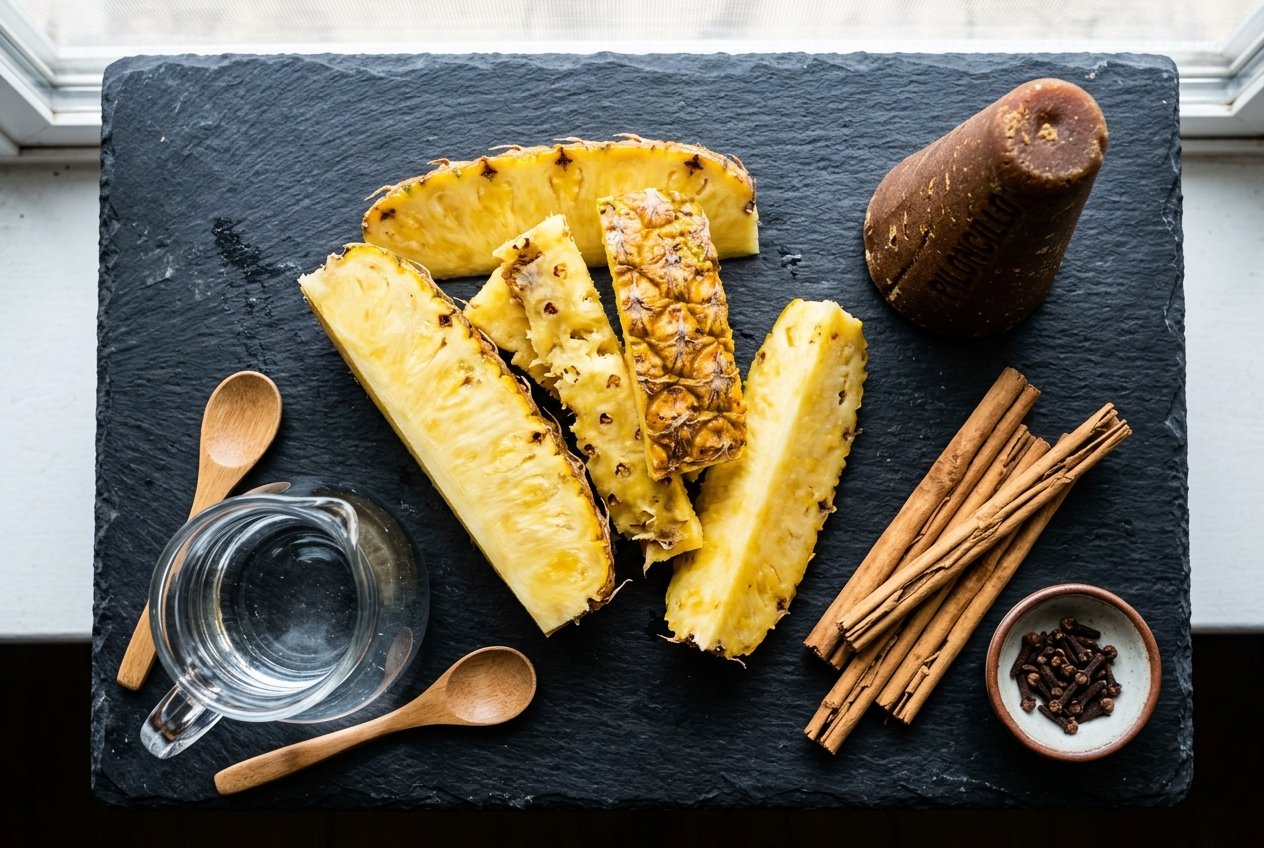
Step-by-Step Master Tepache Recipe
This recipe follows traditional Mexican proportions and is calibrated for a balanced sweetness and acidity at 72 hours. Adjust fermentation time and sugar quantity based on your taste and ambient temperature.
Fermenting pineapple trim connects directly to zero-waste practices in our guide on how to make easy fruit refreshers at home.
Prep time: 15 minutes
Fermentation time: 48 to 72 hours (primary) + optional 24 to 36 hours (secondary carbonation)
Yield: Approximately 2 quarts / 8 servings
Difficulty: Beginner
A note on altitude: If you live at high elevation (above 4,000 feet), such as Denver, Salt Lake City, or Albuquerque, expect fermentation to move faster than the timelines below suggest. Lower atmospheric pressure accelerates CO2 production by wild yeast. Start tasting your tepache at the 36-hour mark rather than 48 hours, and watch the jar closely.
Batch Scaling Guide
Spices scale proportionally: add 1 canela stick and 2 cloves per quart of water.
Equipment List
Ingredients
- 1 whole ripe organic pineapple (peels and core only; reserve flesh for eating)
- 7 oz (200 g) piloncillo cone OR 1 cup tightly packed dark brown sugar + 2 tbsp molasses
- 2 quarts (8 cups) filtered, spring, or chlorine-free water
- 2 sticks Mexican canela (Ceylon cinnamon)
- 3 to 4 whole cloves
Step-by-Step Instructions
Step 1: Clean the Pineapple
Scrub the whole pineapple firmly under cool running water using a stiff vegetable brush. Do not use soap. Remove surface dirt and wax thoroughly. Slice off the leafy crown and the bottom base. Stand the pineapple upright and slice the rind off in thick strips, leaving approximately 1/4 inch of fruit flesh attached to the skin. Cut the fibrous central core into 3 to 4 chunks. Set the flesh aside for another use.
Step 2: Dissolve the Sweetener
Pour 1 cup of warm filtered water into your clean glass jar. Break or grate the piloncillo cone into rough pieces (it can be hard; a grater or a sturdy knife helps). Add the piloncillo pieces to the warm water and stir with a wooden spoon until fully dissolved into a dark amber syrup. If using dark brown sugar and molasses, combine them in the warm water and stir until dissolved.
Step 3: Build the Ferment
Pour the remaining 7 cups of cool filtered water into the jar. The mixture should now be at or near room temperature. Add the pineapple rinds, core pieces, cinnamon sticks, and whole cloves. Press the fruit pieces gently to submerge as much of the surface area as possible beneath the liquid. If pieces float persistently, place a clean, food-safe weight (a small zip-lock bag filled with water) on top to keep them submerged. Submerged rinds ferment more evenly and reduce surface exposure that can invite airborne contaminants.
Step 4: Cover and Ferment
Cover the mouth of the jar with a breathable cloth and secure it tightly with a rubber band. This is critical: a sealed airtight lid on a fermenting jar will trap carbon dioxide and can cause dangerous pressure buildup. Place the jar in a warm area of your kitchen, away from direct sunlight. The ideal ambient temperature is 72°F to 80°F (22°C to 27°C). Higher temperatures accelerate fermentation. Lower temperatures slow it.
Step 5: Monitor Daily
Check the jar every 12 to 24 hours. Here is what to expect:
Taste the tepache with a clean spoon at the 48-hour mark. If it is too sweet, let it go another 12 to 24 hours. If it has reached your preferred balance, move immediately to Step 6.
Step 6: Strain and Refrigerate
Pour the liquid through a fine-mesh strainer into a clean pitcher or jar, pressing the solids gently to extract all liquid. Discard the spent pineapple rinds, core pieces, and spices. Transfer the strained tepache to clean glass containers with lids and place them immediately in the refrigerator. Chilling drops the temperature to a range where yeast activity slows dramatically, effectively pausing fermentation and locking in the current flavor profile.
Step 7: Rest and Serve
Let the refrigerated tepache rest for at least 4 hours before serving. This resting period allows any remaining yeast sediment to settle and the flavors to integrate. Serve chilled over ice. The tepache will remain fresh and at peak flavor for 7 to 10 days in the refrigerator.
How to Carbonate Tepache: Secondary Fermentation
Primary fermentation leaves tepache lightly bubbly but not sharply sparkling. If you want forceful, soda-like carbonation comparable to store-bought kombucha or sparkling water, a secondary fermentation step gets you there.
Secondary fermentation works by sealing the tepache in an airtight, pressure-rated container. Residual wild yeast in the liquid continues converting small amounts of remaining sugar into CO2. Because the gas cannot escape, it dissolves into the liquid under pressure. When you open the bottle, the pressure releases and the CO2 creates vigorous bubbles.
Secondary Fermentation: Step-by-Step
What you need: Pressure-rated swing-top (flip-top) glass brewing bottles, also called Grolsch-style bottles. Standard wine bottles, mason jars with loose lids, and recycled glass bottles are not suitable for secondary fermentation. Insufficient pressure rating can lead to glass rupture, which is a genuine safety hazard.
Step 1: Bottle the strained tepache
Using a funnel, fill your swing-top bottles with the strained primary tepache. Leave exactly 1.5 inches of empty headspace at the top of each bottle. This space is critical. Too little headspace and the bottle may over-pressurize. Too much headspace and carbonation development is slow and uneven.
Step 2: Seal and rest at room temperature
Close the airtight swing-top cap securely. Place the sealed bottles on your kitchen counter at room temperature (72°F–80°F) for 24 to 36 hours.
Step 3: Burp the bottles daily
Once every 12 hours during secondary fermentation, carefully open the swing-top cap over a sink to release excess pressure. This process is called "burping" in home brewing. Tilt the bottle cap slightly and release slowly. Listen for the hiss of escaping CO2. Taste a small sip to gauge carbonation level. Close and reseal immediately.
Step 4: Refrigerate at the right moment
When you open a bottle and hear a satisfying pop followed by visible fine bubbles rising in the liquid, move all bottles to the refrigerator immediately. Cold temperatures drop yeast activity close to zero and lock the carbonation into the liquid. Leaving bottles at room temperature indefinitely after carbonation is achieved risks dangerous over-pressurization.
Step 5: Continue refrigerator burping
Even in the refrigerator, yeast works slowly. For the first week after bottling, open your bottles over a sink once every 3 to 4 days to release residual pressure. After the first week, fermentation typically slows enough that this is no longer necessary.
Fermentation Troubleshooting and Safety Guide
Because tepache relies on wild microorganisms, the fermentation will sometimes produce surface growths, unexpected flavors, or strange textures. Most of these are harmless and easily corrected. Some require you to discard the batch entirely. Knowing the difference is the most important food safety skill for any home brewer.
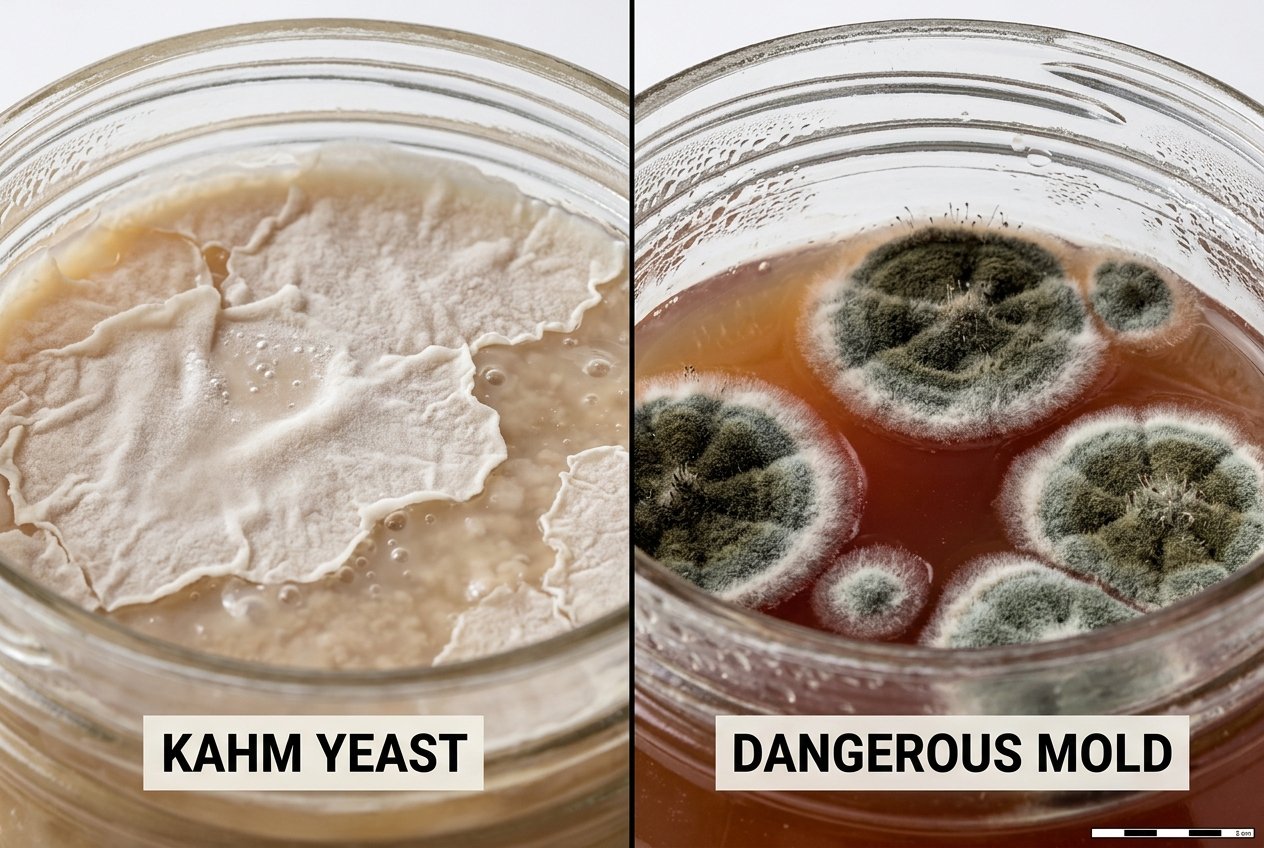
Surface Growth: Kahm Yeast vs. Toxic Mold
The most common concern for first-time tepache brewers is finding something growing on top of the liquid. There are two categories: completely harmless and discard immediately.
What is Kahm yeast? Kahm yeast is the common name for a collection of aerobic wild yeasts (primarily Pichia, Candida, and Zygosaccharomyces species) that form a flat white film on the surface of open-air ferments. Kahm is entirely non-toxic and non-pathogenic. It forms when the surface of the ferment is exposed to air for extended periods. It can impart a slightly bready or musty flavor note to the finished drink but causes no harm. Skim it off and reduce future Kahm by keeping rinds submerged.
What is mold? Mold is filamentous fungal growth caused by species like Aspergillus, Penicillium, or Botrytis. These molds are visually distinct from Kahm yeast because they are raised off the surface and have a hairy or fuzzy texture. Many molds produce mycotoxins, compounds that are toxic to humans and do not break down when heated or strained. If you see any fuzzy, raised, or colored growth on your tepache, discard the entire batch without tasting it. Do not attempt to skim the mold and salvage what is underneath.
The golden rule: If you are ever genuinely unsure whether a surface growth is harmless Kahm yeast or mold, discard the batch. Starting a fresh batch costs a pineapple and a few days. The risk of consuming mycotoxins is not worth it.
Complete Troubleshooting Reference
Preventing Problems Before They Start
Equipment sanitation: Before brewing, wash all equipment (jar, spoons, bottles) with hot soapy water, rinse thoroughly, then rinse again with a diluted food-safe sanitizer or a solution of one tablespoon white vinegar per cup of water. Allow to air dry completely before use.
Temperature control: Maintain a consistent ambient temperature between 72°F and 80°F during primary fermentation. Inconsistent temperatures can stall fermentation or allow undesirable microbial communities to dominate.
Keep fruit submerged: Rinds exposed to air above the liquid surface are far more likely to develop Kahm yeast or mold. Use a food-safe weight or a resealable bag filled with water to keep everything submerged.
Tepache Flavor Variations
Once you have brewed one successful standard batch, it is worth exploring the full range of flavor possibilities. Tepache is highly adaptable. The base fermentation formula remains the same; what changes is the aromatic additions you introduce during the primary fermentation window.
Add any of the following alongside (not instead of) the standard cinnamon and cloves:
Popular Variations
Chili Tepache
Add one jalapeño (for mild, grassy heat) or half a habanero (for intense, fruity heat) split lengthwise and seeded. The longer the chili ferments, the more heat it contributes. Taste at 48 hours and remove the chili early if you want moderate heat. Leave it in for the full 72 hours for a bold, spicy finish. This variation pairs particularly well with mezcal and with salty street food.
Ginger Tepache
Add a 1.5-inch piece of fresh ginger, peeled and sliced thin. Ginger carries its own population of wild yeasts, which can modestly accelerate fermentation activity. It adds a sharp, warming, aromatic quality that complements the pineapple without overpowering it. Ginger tepache works exceptionally well as a mixer with bourbon or rum.
Orange and Clove Tepache
Add two wide strips of orange peel (removing the bitter white pith first) along with an additional clove. The orange peel oils infuse into the liquid and create a brighter, more citrusy aromatic profile. This variation is closest to the traditional recipes from central Mexico, where citrus was historically added to regional ferments.
Cactus Pear (Prickly Pear) Tepache
Add the peeled flesh of one or two prickly pear fruits (tuna) directly to the ferment. The fruit contributes a deep magenta-pink color and a mild, melon-like sweetness. This variation has been popularized commercially by brands like De La Calle.
Watermelon Tepache
Replace half the pineapple rind with watermelon rind (the white and green outer portion). Watermelon rind ferments at a similar rate and produces a lighter, mellower flavor with a subtle sweetness. Alternatively, add watermelon juice when serving rather than during fermentation, for a brighter, fresher result.
Mango Chili Tepache
Add the skin and seed of one ripe mango alongside the pineapple rind, plus half a seeded jalapeño. This combination became one of the most commercially successful tepache flavor profiles in the US market. The mango contributes a tropical sweetness and floral aroma, while the jalapeño creates a slow-building background heat.
How to Serve Tepache: Pairings and Cocktails
Tepache is versatile enough to be served straight as a soft drink, used as a cooking ingredient, or built into craft cocktails. Its natural acidity, residual sweetness, and effervescence make it a useful tool in any beverage program.
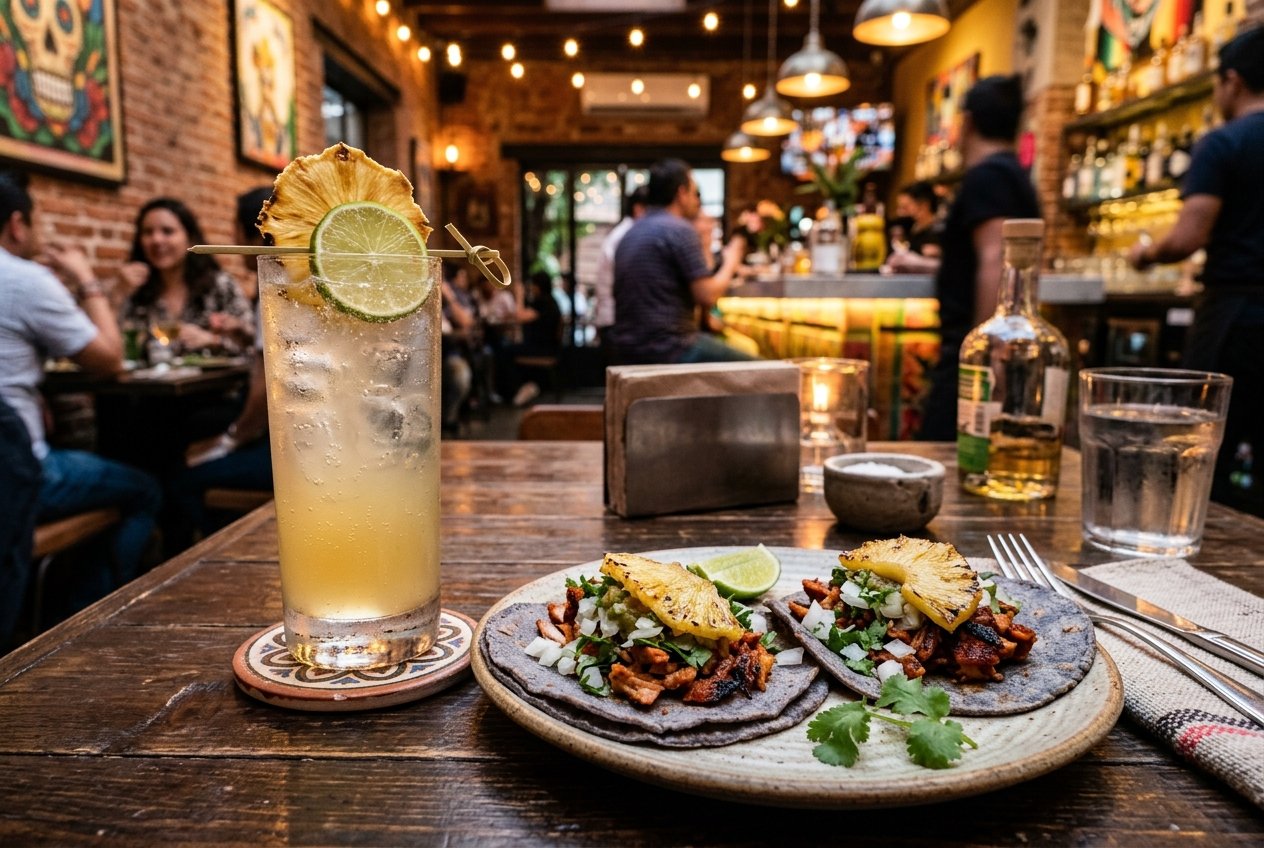
Serving Tepache on Its Own
The classic street food preparation is simple and effective. Fill a tall glass with crushed ice. Pour chilled tepache over the ice until the glass is three-quarters full. Squeeze in the juice of half a lime. Dust the rim with chili-lime salt (Tajín Clásico). Garnish with a fresh pineapple wedge.
The lime juice brightens the tropical notes. The chili-lime salt adds a savory counterpoint that makes the sweetness read as more complex. This is how tepache is served at Mexican street markets, and it works just as well at a backyard cookout.
Traditional Food Pairings
Tepache's fermented acidity and bromelain enzyme make it a natural companion for rich, fatty, savory dishes. The acidity cuts through fat the same way a squeeze of lime does over tacos.
Craft Cocktails
Because tepache is a naturally carbonated, mildly acidic, low-alcohol beverage, it functions well as both a primary mixer and a lengthening agent in cocktails. When building cocktail recipes with tepache, add it last and avoid shaking it vigorously, as you will lose the natural carbonation.
Mezcal Tepache Highball
The most commonly cited and most balanced tepache cocktail.
- 1.5 oz artisanal mezcal (look for an espadin expression with soft smoke)
- 4 oz chilled chili-ginger tepache
- 0.5 oz fresh lime juice
- Ice
- Build in a Collins glass. Add ice first, then mezcal and lime juice. Pour tepache gently over the top. Stir once with a bar spoon. Garnish with a dehydrated pineapple wheel and a pinch of chili powder.
Tepache con Cerveza (The Classic Shandy)
The simplest and most traditional mixed drink version. Combine equal parts ice-cold tepache and a crisp Mexican lager (Modelo Especial, Pacifico, or Tecate). Pour the beer into a chilled pint glass first, then top with tepache and stir gently once. The result is a shandy with tropical complexity far beyond a standard lemon-beer combination.
Tepache Margarita
- 2 oz silver tequila (100% agave)
- 4 oz chilled tepache
- 0.5 oz fresh lime juice
- 0.25 oz agave nectar
- Shake tequila, lime juice, and agave over ice. Strain into a salt-rimmed glass over fresh ice. Pour tepache gently over the top to preserve carbonation.
Bourbon and Tepache Sour
- 1.5 oz bourbon
- 0.75 oz fresh lemon juice
- 0.25 oz simple syrup
- 3 oz chilled ginger tepache
- Shake bourbon, lemon juice, and simple syrup over ice. Strain into a rocks glass over a large ice cube. Top with ginger tepache. Garnish with a lemon twist.
Using Tepache in Cooking
Over-fermented or surplus tepache that has gone too sour to drink is still useful in the kitchen.
- Pineapple vinegar: Strain and bottle surplus over-fermented tepache. Use it as a finishing vinegar on grilled fish, drizzled over fruit salads, or whisked into salad dressings.
- Meat marinade: The combination of acidity and active bromelain in tepache makes it an effective meat tenderizer. Use it as the liquid base in a marinade for pork, chicken, or shrimp. Let proteins sit in tepache-based marinade for 30 minutes to 2 hours maximum. Longer exposure to bromelain can break proteins down to a mushy texture.
- Popsicle base: Mix tepache with fresh fruit juice or diced mango and freeze in popsicle molds for a fermented, lightly fizzy paleta.
- Cooking grain liquid: Replace plain water with tepache when cooking rice, quinoa, or farro. The organic acids and residual sugar add a subtle savory-sweet complexity. This works particularly well with Mexican rice dishes and as a braising liquid for carnitas. Use a ratio of 50% tepache to 50% water; full tepache can make the grain too acidic.
How to Store Tepache
Proper storage protects the flavor, maintains safe carbonation levels, and extends the useful life of your batch.
Primary Storage Rules
Refrigerate immediately after straining: As soon as you strain the solids out of your primary ferment, transfer the liquid to clean, lidded glass containers and refrigerate. Cold temperatures drop yeast activity dramatically and effectively pause the fermentation, preserving the current flavor balance.
Storage containers: Use glass whenever possible. Plastic containers can absorb flavor compounds over time and may leach trace chemicals into an acidic fermented beverage. Glass mason jars with screw-top lids work well for refrigerator storage when the tepache is consumed within a few days. Swing-top bottles are ideal for carbonated tepache.
Shelf life: Properly stored in a clean, cold refrigerator, tepache maintains peak fresh flavor for 7 to 10 days. The fermentation does not stop entirely in the refrigerator; it continues very slowly. After 10 days, you may notice increased sourness as acetic acid continues to accumulate.
Freezing: You can freeze tepache in glass or food-safe plastic containers with adequate headspace for expansion. The live cultures will be mostly inactivated by freezing but will partially reactivate upon thawing. Thawed tepache will be less carbonated than fresh but retains its flavor for use as a cooking ingredient, cocktail mixer, or popsicle base.
Pressure Management for Bottled Tepache
If you have performed secondary fermentation and your tepache is carbonated in swing-top bottles:
- Store all bottles upright in the refrigerator.
- Open each bottle over a sink once every 3 to 4 days for the first week to release accumulated pressure.
- After the first week, check bottles every 7 to 10 days.
- If a bottle feels very firm, or hisses when you slowly open it, consume it within 48 hours and monitor the remaining bottles closely.
- Never store carbonated tepache in the freezer. CO2 behaves unpredictably at freezing temperatures and can cause bottle rupture.
Tepache vs. Other Fermented Drinks
Tepache is unique among traditional fermented drinks around the world. Understanding how it compares to other beverages helps clarify what makes it distinct and helps buyers and brewers choose the right drink for their routine.
Comprehensive Comparison Table
Tepache vs. Kombucha: The Most Common Comparison
Kombucha and tepache are the two most frequently compared fermented drinks in the US market. The comparison makes sense: both are low-alcohol, probiotic-containing, naturally carbonated beverages.
Key differences that matter practically:
- Fermentation time: Tepache takes 2 to 4 days. Kombucha requires 7 to 14 days for primary fermentation. Tepache is faster and more immediately rewarding for beginners.
- Starter requirement: Kombucha requires a SCOBY, a symbiotic culture of bacteria and yeast that you must acquire from another brewer or a commercial supplier. Tepache requires nothing beyond fresh fruit. This makes tepache significantly more accessible.
- Flavor: Kombucha tends toward a sharper, more assertively vinegary acidity with tea-derived tannins. Tepache is sweeter, more tropical, and gentler on the palate.
- Acidity: Both are acidic, but kombucha's longer fermentation window and SCOBY activity typically drive acetic acid levels higher. Tepache at the 72-hour mark is noticeably less sour than most commercial kombucha.
- Cost: Tepache uses pineapple peels that would otherwise be discarded. Kombucha requires quality tea and a healthy SCOBY. Tepache is the more economical of the two to brew at home.
Tepache vs. Pulque
Pulque is often mentioned alongside tepache in discussions of traditional Mexican fermented beverages, but the two drinks are quite different in character, origin, and alcohol content.
Pulque is produced by fermenting the sap (aguamiel) harvested from the maguey plant (Agave salmiana). It has been brewed in Mexico for at least 2,000 years and holds deep ceremonial significance in Aztec culture. The fermentation is rapid (12 to 24 hours), but the resulting beverage is considerably more alcoholic (4.0% to 7.0% ABV) and has a thick, viscous, slightly slimy texture from natural polysaccharides in the agave sap. Its flavor is intensely sour, yeasty, and somewhat funky, with a flavor profile unlike anything in the Western fermented beverage tradition. Pulque does not travel or store well and is rarely available outside of Mexico in its traditional form, though modern pasteurized versions are beginning to appear in specialty US markets.
Tepache vs. Tejuino
Tejuino is another traditional Mexican fermented drink that is often confused with tepache, particularly outside of Mexico. Where tepache uses pineapple rinds, tejuino uses ground masa (nixtamalized corn dough) as its fermentation base. The two drinks actually share a common ancestor in the pre-Columbian Nahuatl corn drink tepiatl, but they evolved in different regional directions.
Tejuino is popular in Jalisco and Sinaloa, where it is sold cold from street carts, typically blended with lime juice, chili salt, and sometimes a scoop of fruit sorbet. Its flavor is earthy, mildly sour, slightly yeasty, and corn-forward. It has a thicker, slightly grainy mouthfeel compared to tepache's clean, light effervescence.
Both drinks are authentically Mexican, both are lightly fermented, and both sit in the same low-ABV category. The practical difference for someone in the US is availability: tepache is far more commonly found in Mexican restaurants and specialty stores, and it is dramatically easier to brew at home because pineapple rinds require no preparation beyond washing, while tejuino requires sourcing and working with masa.
Commercial Tepache: What to Buy
If you want to explore tepache without committing to a home brewing project, or if you need a verified, low-alcohol version suitable for those avoiding trace alcohol from wild fermentation, commercial tepache is a good starting point.
The US Commercial Market
The commercial tepache market in the United States has grown significantly since the early 2020s. The most widely available brand is De La Calle, a California-based company that brought canned tepache to national retail at scale and placed it in major grocery chains across the country.
De La Calle Tepache is available at Whole Foods Market, Target, Walmart, Safeway, World Market, and through delivery platforms including Instacart and Uber Eats. Common flavors include:
- Classic Pineapple Spice
- Mango Chili
- Cactus Prickly Pear
- Watermelon Jalapeño
- Grapefruit Lime
- Strawberry Citrus
Commercial tepache is pasteurized, meaning the live probiotic cultures present in homemade tepache have been heat-killed to ensure shelf stability and consistent ABV control. The trade-off is predictability and safety; the cost is the loss of live microbial activity. Commercial tepache typically falls below 0.5% ABV and can be labeled non-alcoholic.
Other brands to explore: The craft and regional tepache market is expanding. Look for locally produced artisanal tepache at Mexican specialty stores, craft beverage shops, and regional farmers markets in cities with large Mexican-American communities, including Los Angeles, Chicago, San Antonio, and Houston.
Store-Bought vs. Homemade: Which Is Right for You?
How to Read a Commercial Tepache Label
Not all canned tepache is the same. When comparing products in a store, check these label elements before buying:
- ABV statement: Look for a declared ABV. Products under 0.5% ABV are legally non-alcoholic in the US. Products without a clear ABV statement may be in a legal gray area worth questioning.
- Pasteurization: If the label says "pasteurized," the live cultures have been heat-killed. The drink will not provide active probiotics. This is not a flaw; it simply means you are buying tepache for flavor and hydration, not live cultures.
- "Live cultures" or "raw": Some small-batch artisanal tepache brands sell unpasteurized, refrigerated tepache with active live cultures. These have a much shorter shelf life and should always be kept cold.
- Organic certification: USDA Organic certification on the label means the pineapple and sugars used meet organic standards. This matters if you are buying tepache for probiotic reasons, since the microbial culture on organic fruit is typically more diverse.
- Sugar content per serving: Compare added and total sugars. A standard 12 oz can of commercial tepache should sit between 10 and 18 grams of sugar. Above 20 grams puts it closer to soda territory.
Frequently Asked Questions
❓ What is tepache?
Tepache is a traditional Mexican fermented beverage made from pineapple rinds, unrefined whole cane sugar (piloncillo), filtered water, and warm spices like cinnamon and cloves. Wild yeasts and lactic acid bacteria living naturally on the pineapple skin ferment the liquid over two to four days, creating a sweet, tangy, and gently fizzy drink.
❓ Is tepache alcoholic?
Yes, home-brewed tepache contains a small amount of alcohol as a natural byproduct of wild yeast fermentation. Batches fermented for 48 to 72 hours typically range between 0.5% and 2.0% ABV. Most commercial canned tepache products are pasteurized to stay below the US legal 0.5% ABV threshold for non-alcoholic drinks.
❓ What does tepache taste like?
Tepache tastes like a light, sparkling pineapple cider with warm cinnamon notes. It is sweet but not syrupy, pleasantly tangy with natural organic acids, and has an earthy, molasses-like finish from the piloncillo.
❓ How long does it take to make tepache?
Primary fermentation takes 48 to 72 hours at room temperature (72°F to 80°F). If you choose to bottle-condition the strained liquid for secondary carbonation, add another 24 to 36 hours. From prep to a fully chilled drink takes 3 to 5 days.
❓ What is the white foam on top of fermenting tepache?
White frothy foam on the liquid surface is completely normal and indicates active fermentation from wild yeasts releasing carbon dioxide. A thin, flat white film is harmless Kahm yeast, which can be skimmed off. If the growth is fuzzy, raised, or colored (green, black, pink), that is mold and the entire batch must be discarded.
❓ Can you drink tepache every day?
For most healthy adults, a daily 6 to 8 oz serving of tepache is safe and provides beneficial lactic acid bacteria and bromelain enzyme. Anyone monitoring sugar intake, managing diabetes, pregnant, or avoiding alcohol should drink it in moderation and account for residual carbohydrates and trace alcohol.
❓ Does tepache contain caffeine?
No. Tepache is naturally 100% caffeine-free because it is brewed from pineapple fruit rinds, cane sugar, water, and spices, unlike kombucha, which is brewed from caffeinated tea leaves.
❓ How is tepache different from kombucha?
Tepache is brewed from pineapple rinds and ferments in 2 to 4 days using wild fruit microbes without a starter. Kombucha is brewed from sweetened tea and requires 7 to 14 days of fermentation using a SCOBY starter culture. Tepache is naturally sweeter, more tropical, and faster to brew at home.
❓ Can you drink tepache while pregnant? (¿Se puede tomar tepache en el embarazo?)
Pregnant individuals should exercise caution with homemade or artisanal street tepache. Wild unpasteurized fermentation can produce variable alcohol levels (up to 2.0% ABV) and carries a small risk of unpasteurized bacteria. Commercial, fully pasteurized and lab-tested non-alcoholic tepache (under 0.5% ABV) is significantly safer, but consulting your healthcare provider is always recommended.
❓ Does tepache contain beneficial gut probiotics?
Yes. Because authentic tepache is naturally fermented by wild lactic acid bacteria (such as Leuconostoc and Lactobacillus species) and yeasts living on pineapple rinds, raw unpasteurized tepache contains live active cultures and organic acids that support gut microbiome diversity.
Sources and Scientific References
- National Center for Biotechnology Information (NCBI / PubMed): Microbial diversity and lactic acid bacteria dynamics in traditional Mexican fermented pineapple beverages. [PubMed Central]
- Alcohol and Tobacco Tax and Trade Bureau (TTB): Title 27 CFR - Alcohol Beverage Labeling and Fermentation Threshold Regulations. [TTB.gov]
- USDA FoodData Central: Nutritional Profile of Raw Pineapple (Ananas comosus) and Unrefined Cane Sugars. [FoodData Central]
- Instituto Nacional de Antropología e Historia (INAH Mexico): Pre-Hispanic and Colonial Fermented Beverages: The History of Nahuatl Tepiatl and Agave Traditions. [INAH.gob.mx]
- Journal of Food Science and Technology: Proteolytic Activity of Bromelain and Its Digestive Bioavailability in Fruit Fermentation.
Medical Disclaimer: This guide is for informational and educational purposes only and does not constitute medical advice. Consult a healthcare provider before introducing fermented foods into your routine if you are pregnant, managing diabetes, or taking blood-thinning medications.
Related Beverage & Sourcing Guides
Explore our practical guides on drink recipes, market selection, and commercial beverage development:


Test Question
Test Answer